BRAVE Peer Educators are part of a preventative program that educates Xavier’s campus on bystander intervention, healthy relationships and everything that falls under the umbrella of gender- and power-based violence. Although BRAVE effectively cultivates a safer campus that does not tolerate violence in any capacity, Xavier and every other university cannot promise that gender- and power-based violence will not happen, as it is most prevalent on college campuses. It will be a long and treacherous road to end the cycle of sexual violence on college campuses, so it is vital to know the resources that Xavier offers to survivors in case you or someone you know is affected by gender or power-based violence.
One of the first steps a survivor of gender or power-based violence can take is to contact the Campus Advocacy Coordinator (CAC), Susan Pelle. The CAC’s role is to provide confidential support, and they will not share any personal information with the university without the student’s consent.
The CAC provides immediate support, which can include just listening, providing options for the survivor to take so that they can make an informed decision that is best for themselves, and also ongoing support. Immediate relocation to a safe place and permanent housing relocation is also a support option.
The CAC also lets students know their rights, other campus resources, academic outreach to professors, medical and counseling referrals and legal referrals if the student decides to take legal action.
Medical support can include referrals, accompanying survivors to medical exams, testing and treatment and as accompaniment to the ER for a sexual assault exam. Safety planning is also included and can entail all of the steps needed to recreate a safe environment.
If a student is looking for more confidential on-campus resources, the Peer Support Volunteers are another great option. Xavier’s Peer Support Volunteers are a group of trained peers that provide confidential, trauma-informed support services for survivors. They also host survivor support groups and workshops centered around how to support a friend who is affected by gender-and power-based violence.
Other confidential resources on campus include the Center for Faith and Justice’s Abby King-Kaiser, Counseling Services and Psychological Services. After-hours support is also available through texting or calling Women Helping Women’s 24-Hour Crisis Line at 513-381-5610. A confidential advocate will be available to speak with, and for 24-hour confidential online chat support, visit womenhelpingwomen.org and select “Live Chat.” This resource serves all gender identities and sexual orientations.
Although non-confidential resources on campus may seem daunting to a survivor, these resources are also private, and the information stays between university officials and the survivor.
Kate Lawson and Talia Mason are a part of the Title IX & Interpersonal Violence Response office and can be contacted if a survivor wants to report the instance of violence they experienced. Title IX’s office oversees ensuring that student’s rights are protected and that sex discrimination does not have a place at Xavier. BRAVE Peer Educators can also provide non-confidential, immediate support to those who disclose to them, and will also direct them in making informed decisions about what comes next.
These resources are here at Xavier to let students know that they are not alone and that the university will do everything it can to make sure survivors feel supported. These resources are also here for friends and family of survivors and those who receive disclosures as well. Support for the community around survivors is equally as important. Most importantly, Xavier’s resources set the standard that the cycle of sexual violence on college campuses will not be perpetuated by ignorance. We hear you, we see you and we believe you.
Photo provided by Daisy Hernández | The Miami Student
Students who visit Daisy Hernández’s office in Bachelor Hall are immediately greeted with a collection of posters on the door.
One poster, “Yoga for Writers,” humorously connects English terms with yoga poses. Another reads, “We LOVE you and we HONOR you and we defend your right to be here.” Others advertise campus organizations such as Spectrum and Women Helping Women.
Three of the office’s walls are painted white, but a yellow one stands out. Hernández, an assistant professor of creative writing at Miami University, chose the color herself. A picture of June Jordan, a Black poet, hangs on the wall. Jordan wrote one of Hernández’s favorite poems, “Poem About My Rights.”
A bookshelf stands to the right, overflowing with literature. When talking about writers, a particular one stands out to Hernández: Sandra Cisneros.
“She’s a poet and her language is just so imagistic, so beautiful,” Hernández said. “She’s also Chicana, and she was writing in … mostly English, but she brings in Spanish and she was writing about her … immigrant community which is really different from mine, but there were points of similarities.”
An author as well as professor, Hernández’s most recent book, “The Kissing Bug,” which won the PEN/Jean Stein Book Award, is about Chagas disease, which is prominent in rural Latin American areas. For this book, Hernández had to pivot what she was reading from books to science articles, which required simplifying complex scientific concepts.
“When you’re writing about science or medicine, you’re basically doing translation work,” Hernández said. “How can I take this terminology, these concepts, and make them palpable for a general reader who doesn’t sit around reading science articles for fun?”
Hernández also poured her time into interviewing hundreds of people, ranging from patients with the disease to entomologists that study the triatomine bugs that transmit the disease. She spent seven years working on the book.
Along with the PEN award, Hernández also received a $75,000 prize. She said she was blown away by the honor.
“I wanted this book to raise awareness around this neglected disease that disproportionately impacts the Latinx immigrant community in the U.S.,” Hernández said. “This award definitely puts the book in front of people who maybe would not have even thought about picking up the book or weren’t thinking about the subject matter.”
The award’s impact was heightened by something personal to Hernández – the book was inspired by her aunt who died from Chagas disease.
“She lived for many, many years just going in and out of hospitals,” Hernández said. “And then she died in 2010 … You forget that this time could be it, because so many times it felt like ‘Oh my God, this could be it,’ and it wasn’t.”
The path to “The Kissing Bug” started with an assignment Hernández had to do back in middle school. Her science teacher told the class they had to write essays about why life might exist on other planets.
“I wrote a very compelling essay arguing that there was life on Neptune or something like that, and my teacher loved it,” Hernández said. “She read it to the class, and I remember while she was reading, I was looking around. All the little kids were nodding their heads, and I just remember feeling like if I can convince these fools that there’s life on Neptune, I can do anything. Oh my God, I was drunk on power.”
The moment inspired Hernández to continue writing.
“I loved it,” Hernández said. “I was like, ‘Woah, this is amazing.’ It was the first time as a child that I felt like, ‘Oh my gosh … you can touch people with your words. You can actually make them feel something, have them think a different way.’”
Hernández was raised in America in a home with parents who didn’t speak English. She started to notice the gap between her worlds while watching the family’s television.
“I also grew up with seeing two very different Americas because I was a little journalism nerd,” Hernández said. “The English news never, never looked like the Spanish language news.”
Hernández would watch Spanish news about civil wars in Central America or immigration status in the U.S., then switch over to English news and hear about local crime and the Reagan administration.
“There were just so many stories that were not in both worlds,” Hernández said. “I knew at that point … A) writing has power and B) I can bridge these two worlds somehow.”
When Hernández graduated from high school, she enrolled in William Paterson University. She wanted to major in journalism, but the degree was more focused on marketing and communications, so she majored in English instead.
Hernández then attended New York University to get her Master of Arts in both journalism and Latin American and Caribbean studies. Hernández also studied at the University of Miami where she got her Master of Fine Arts in creative writing.
As Hernández started to write more often, opportunities opened up. She’s been published in Ms. magazine, had an internship with The New York Times (NYT) editorial board in 2002 and then reported for NYT’s Metro desk.
While working for NYT, Hernández covered a multitude of stories, including fires, deaths, accidents, community gardens and bad weather. She even found some interesting stories through topics that are generally considered boring.
“I actually wrote about tax returns,” Hernández said. “That was my best story, actually, [it] was an undocumented immigrant family deciding whether or not to file a tax return … She wanted to file a tax return and start [a valuable] paper trail, but her husband did not.”
After the New York Times, Hernández joined “ColorLines” as a magazine editor. She then continued her journalism career freelancing for organizations such as National Geographic, The Atlantic and NPR. In 2014, she released a memoir titled “A Cup of Water Under My Bed: A Memoir,” which incorporates Spanish and English.
Since 2015, Hernández has taught creative writing at Miami. Hernández realized she wanted to be a professor while working for various media publications.
“I often found myself teaching even in my journalism [and] publishing career,” Hernández said. “I found myself really interested in teaching people who are not professional writers how to write op-eds or write essays about their lives, and then when I was working with actual interns and younger folks, I was really just fascinated by essentially showing them what others had shown me to do.”
Teaching creative writing also allows her to change pace from journalism.
“What I love about fiction is actually the intimacy that you can have with characters,” Hernández said. “That’s something that you cannot quite experience in nonfiction no matter how hard you try, because they’re not invented characters.”
This semester, Hernández teaches ENG323 Intermediate Creative Nonfiction and ENG254 Latinx Literature and the Americas.
Cass Hauck, a sophomore biology, creative writing and premedical studies major, enjoys having Hernández as a professor for ENG323.
“She really tries to make the class fun and engaging and offers many opportunities for student-led discussions,” Hauck said. “She also helps us and the English department get to meet with other authors and professionals, which is really cool.”
Madelyn Detloff, chair of the English department, had been teaching Hernández’s books in classes before Hernández even joined Miami’s faculty.
“Professor Hernández is an extremely talented writer and a gifted teacher,” Detloff said. “Her work sheds light on issues and realities that are often obscured or marginalized because they affect folks who are not associated with the dominant class and culture.”
For aspiring writers, Hernández recommends that they enroll in any writing classes they can.
“Take classes,” Hernández says. “You learn from your teachers, but you also learn from your peers. You learn from the other writers in the room so much.”
Hernández is now able to share her love for writing with students.
“When a sentence comes together on the page, it is so satisfying,” Hernández says. “The music of it or the images that come together or the way it just can seem more true than what you’ve actually lived.”
The revelation was discouraging and left me feeling frustrated and disappointed. Even more so when I talked to former Women of Cincy interviewee Grace Cunningham, who further confirmed the lack of care her story received from the university. It left me wondering what was available to students who go through these types of traumatic experiences, where can they turn to on a campus that carries these troubling trends?
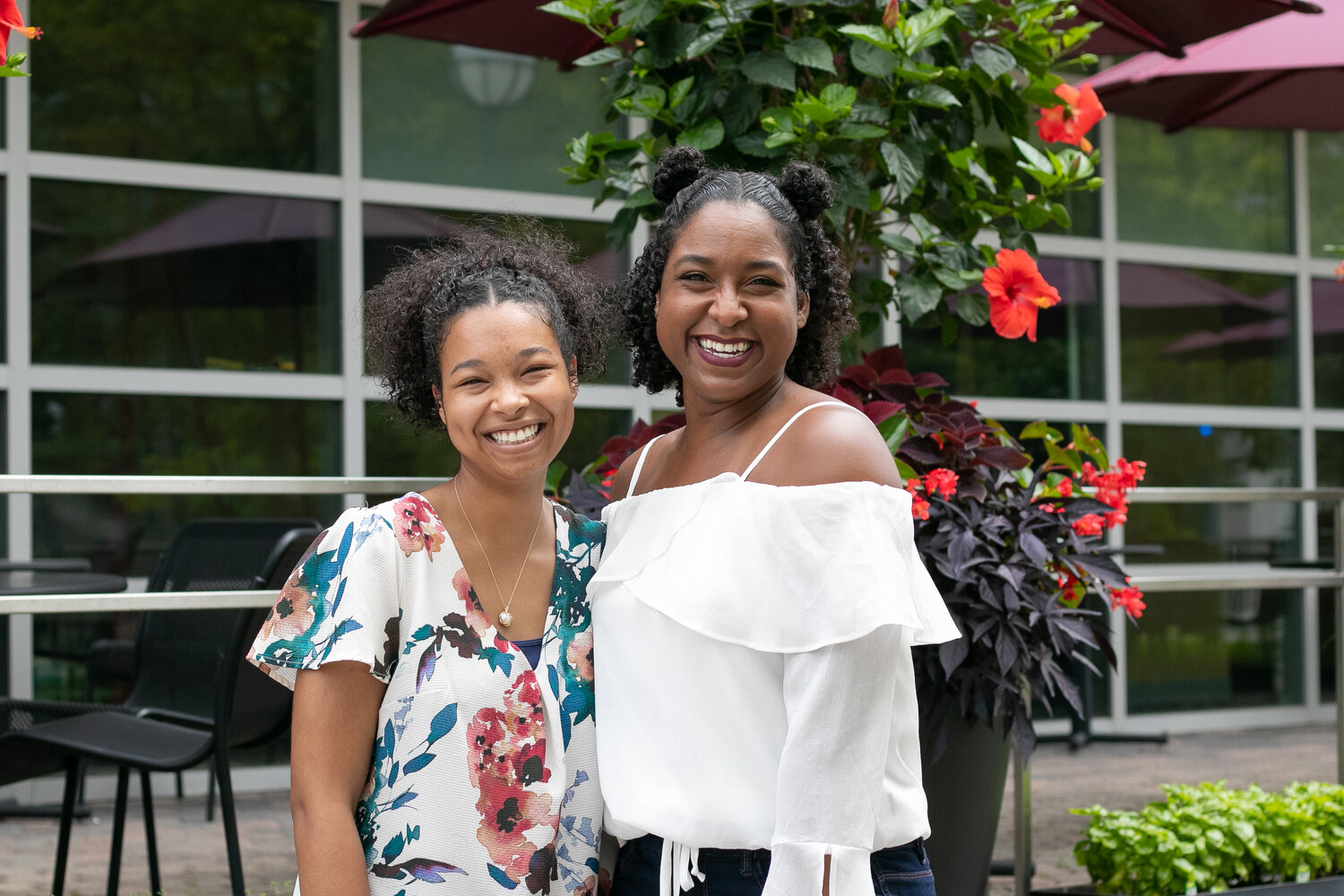
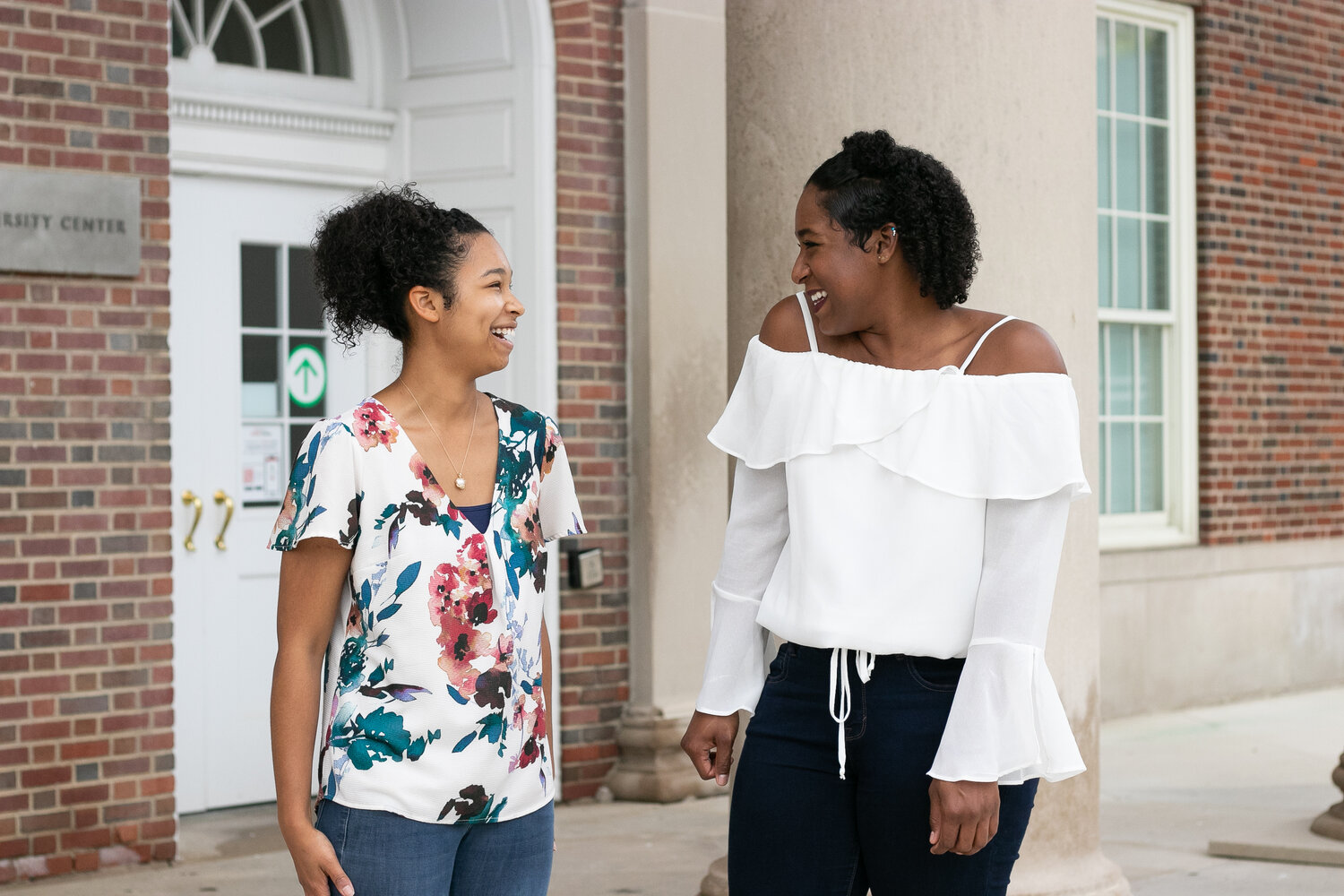
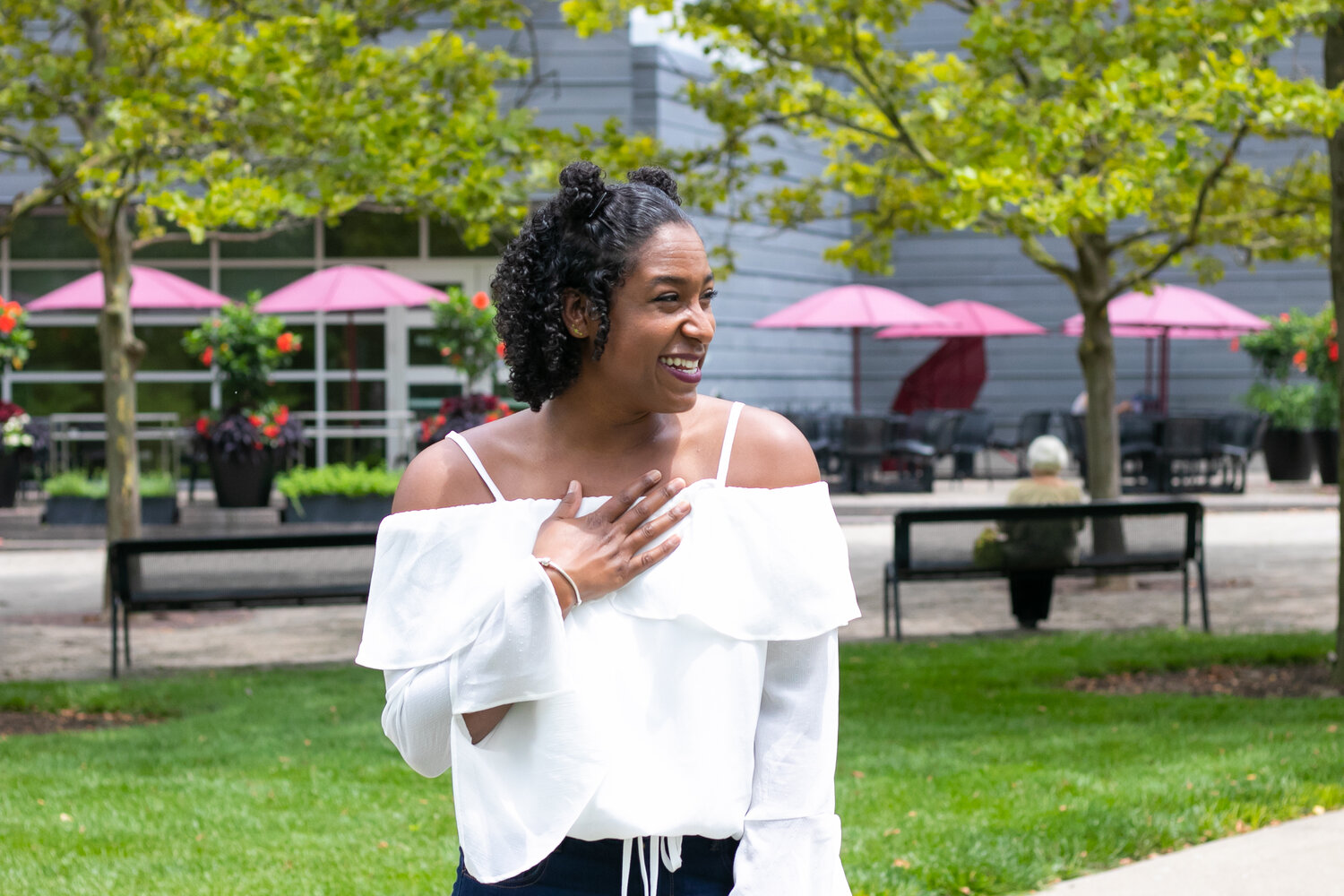
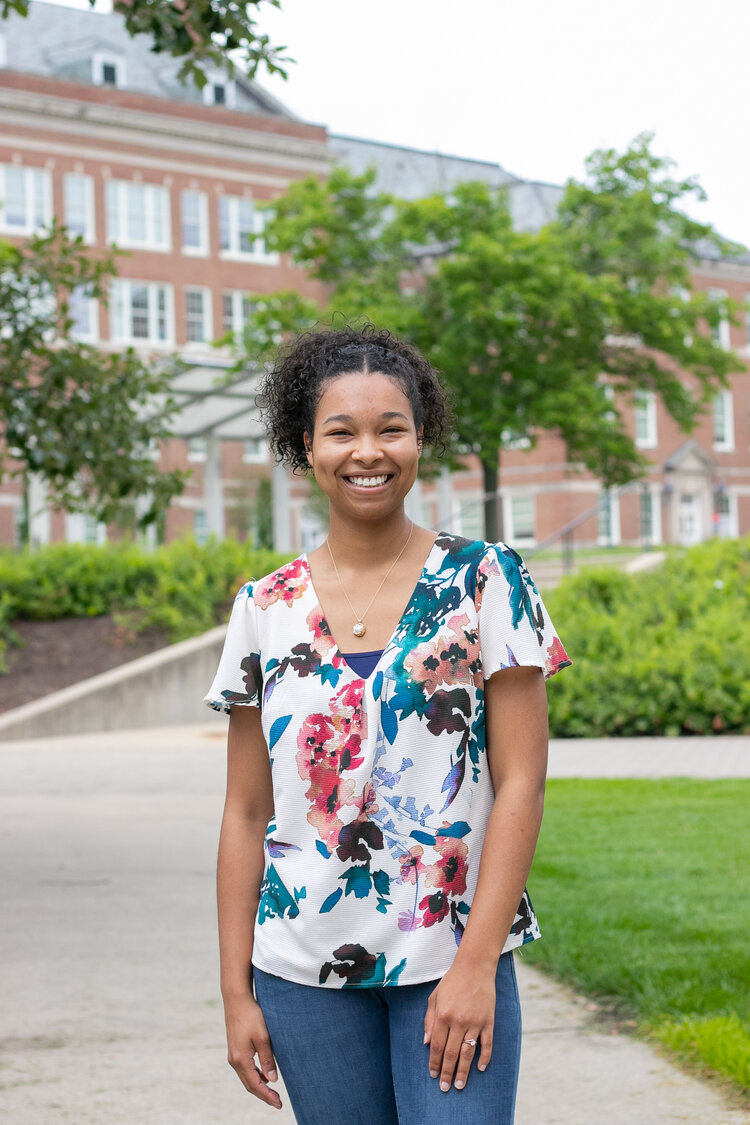
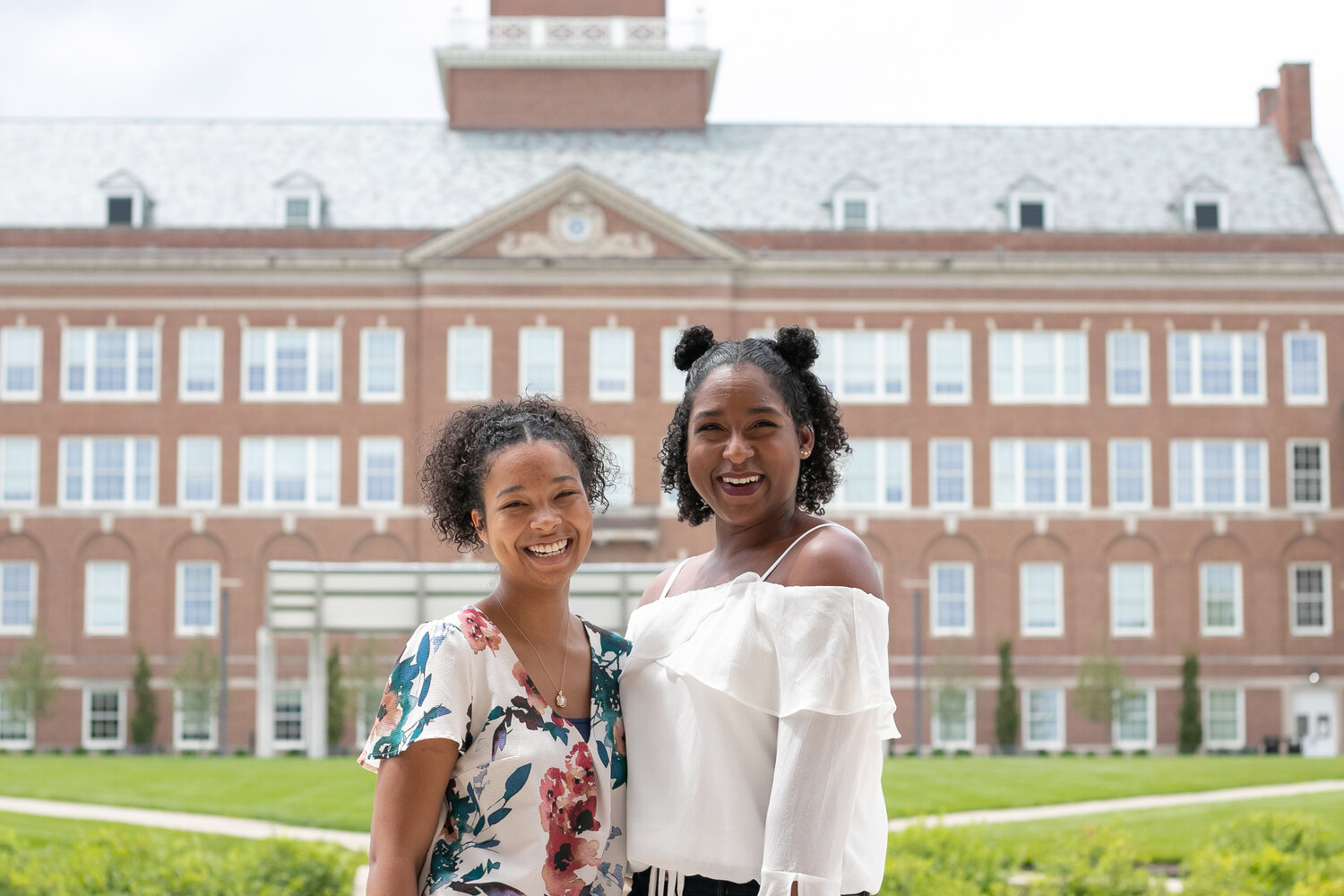
When researching what resources were available and were genuinely helpful to students, I found the Women Helping Women (W.H.W) Campus Advocates Zoe Miller and Cheniece Wilson. Zoe and Cheniece’s presence when I first had the opportunity to talk to them over Zoom can be described as a warm hug. They radiated compassion, professionalism, and care for the work they do. After my previous experiences of trying to contact people at U.C. about how the university handles sexual assault reports on campus, talking to Zoe and Cheniece showed me what this experience should be like for students every time.
As the official Campus Advocates for the University of Cincinnati, Zoe and Cheniece are responsible for creating awareness and education around gender-based violence. The pair focus on connecting students who have experienced gender-based violence to appropriate resources, being a confidential support system for survivors, and more. These women do it all and do it with the utmost love for their work and the students they help every day.
Both women have local roots; Zoe received her master’s degree from U.C. in 2018 for social work and Cheniece graduated from Xavier in 2019 with a bachelor’s degree in social work and a minor in gender and diversity studies. They have worked in courts, police departments, schools, shelters, and more. Their dedication to their advocacy is nothing short of awe-inspiring and gives me more restored hope in how U.C.’s community can continue to tackle these issues of gender-based violence on our campus.
The following Q&A is based on the interviewee’s firsthand account of their experiences and opinions alone.
As campus advocates, the general premise of your role is to provide resources to students who are impacted by gender-based violence and create awareness for this. Could you tell me what some more specifics of this role are?
Cheniece: As a campus advocate, our primary role is to serve students, staff, and faculty members of U.C.’s community. So some of the things we do are one-on-one appointments in crisis interventions, court advocacy, hospital accompaniments for survivors of gender-based violence (G. B. V.), assistance with Title IX hearings and academic accommodations with this, any referrals to outside resources, and we host a weekly support group.
I think on a college campus there are a lot of instances of rape culture that go unchecked every day. Would you be able to provide some examples of what rape culture can look like or how to identify it?
Zoe: Rape culture, I feel like right now has become sort of a buzzword in a way.
Cheniece: I agree.
Zoe: I think sometimes people don’t know what it means. Rape culture is this sociological theory of a setting in which rape is pervasive and normalized due to societal attitudes about gender and sexuality.
So when we’re talking about rape culture, we are talking about dismantling that idea. To break it down with what we do on campus, we discuss what it is in a lot of our prevention programming. We have a program called bystander training which is where we discuss this spectrum of violence and recognize the frequency of this behavior.
You know, there’s a scale of what rape culture can look like. A lot of times these “less harmful” words or behaviors can be more frequently used and accepted as normal by people.
I’m guessing this is a dangerous viewpoint?
Cheniece: Absolutely, because this means that rape culture is still happening, gender-based violence is still happening, but on the lower end of this scale. It paves the way towards increasing violence and tolerance of this behavior.
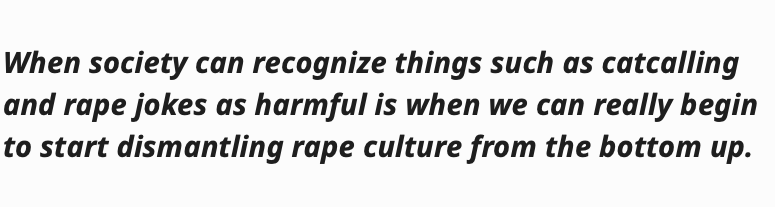
Zoe: When society can recognize things such as catcalling and rape jokes as harmful is when we can really begin to start dismantling rape culture from the bottom up. When I say the bottom up, usually when we talk about this we are looking at the spectrum or like a pyramid of things, and at the bottom is kind of where that catcalling and rape jokes live.
So for example with our programming, we do a thing called “In Reel Life” where we have a conversation and identify examples of what rape culture behavior can look like on film, and point out where society is accepting pervasive attitudes and behaviors.
Cheniece: We did one about “Twilight” that went really well.
Zoe: It did, it started off our series.
Cheniece: The whole time we talked about how much of a stalker Edward was.
Zoe: Yes, I remember when I watched it when I was younger we were told that everything he’s doing is romantic. So there’s a point in the movie where Edward is in Bella’s bedroom, but Bella never gave consent for him to enter, and she’s sleeping. He’s just standing over her watching. This is not only an example of him stalking but his behaviors escalating as well. Had Edward been represented as his true 104-year-old self the audience would have had a completely different reaction to this.
Cheniece: Beyond this, we have training for jobs, bars, and more. Rape culture can be perceived in totally different ways for all these locations. We have to be able to have different conversations in different settings to be able to educate on all levels.
Why do we need a focus on gender-based violence on a college campus specifically? Why have all these tailored resources just for college students?
Zoe: On a college campus, college students might be, and typically are, more vulnerable to gender-based violence because of a potential lack of exposure or understanding of healthy relationship dynamics.
Cheniece: We work to try and educate students on healthy relationship habits, what this gender-based violence can look like, and offer them a safe place to go should they experience it.
Zoe: So on a college campus there is something called a “red zone” and what that is, is a period of time typically in the fall semester where the majority of sexual assaults will happen on campus. This influx of new students, in a new environment, leaves a lot of people open to being potentially harmed.
What do you hope is people’s biggest takeaway upon learning about the work you two do?
Cheniece: As campus advocates, we are available to everybody a part of the U.C. community. So that includes the main campus, the branch campuses, virtual school, and faculty and staff. If you are part of the community we are here for you.
Zoe: We work with all survivors regardless of racial, sexual, gender, or religious identity. Our name says Women Helping Women, which oftentimes might deter somebody, but we are here to help everyone who may need it.
When we talk about gender-based violence, there is a big push to use the word survivor instead of the word victim. Do you wanna talk about that?
Cheniece: For some people, being referred to as a victim has a very negative connotation. Using the term survivor can empower the individual and allow them to see themselves as a true survivor to what they have experienced. It really gives them back that control over their autonomy. On the flip side of that, some survivors do prefer to be called victims. We do try to reflect what terms and verbiage our clients are using, whatever they feel connected to is the right choice for them. But it is personal.
Can you walk me through an average day on the job?
Cheniece: Yeah! I would say for both of us, every day is kind of new. I love when we get asked this question, you know our day can get filled up with things like one-on-one interventions or collaborations with other offices on campus, training, support groups, the list goes on! All of that being said, when doing this crisis work, all of that can change in an instant. Sometimes we have to push away that to-do list until the next day because at the end of the day my number one priority is really making sure our survivors are being served properly.
Zoe: I would agree with Cheniece on that. Advocacy work is a lot of flexibility in what you do. You never know when your services are going to be needed, and how they’ll be needed. Helping our survivors is always the end goal though.
I noticed that a lot of the campus events you had this year, whether on campus or virtual, were tailored to specific groups on our campus. I noticed a ton of great work that came after the Atlanta Spa Shooting, creating programs that explained specific gender-based violence in the A.A.P.I community, so why is it important to have these tailored events for specific communities of people versus a general awareness type thing?
Cheniece: The number one thing to note is that there are a lot of cultural and identity intersectionalities that intertwine with gender-based violence. This ends up putting some individuals at higher risk for gender-based violence. About 45 percent of our clients are Black P.O.C. identifying, and about 27 percent are a part of the L.G.B.T.Q.+ community.
I had never heard those statistics before, hearing statistics like that always takes you aback just a little bit. Going further into this, what steps do you take to tailor your programs to students of various gender identities and sexualities?
Zoe: We do a lot of outreach on differing identities on our social media page. We use social media in every aspect of the work that we do. Some examples of things we’ve posted on there we provided different stats regarding gender-based violence in the L.G.B.T.Q. community like the one we just shared with you; we created a spotlight of different gender-based violence advocates both local and around the world of all types of identities, we made posts highlighting the stats of B.I.P.O.C. and gender-based violence, we collaborate a lot with the L.G.B.T.Q. Center and the Gender Equity and Inclusion office, too.
I think that’s awesome how much care you both put into making your programs a place where everyone can feel safe and heard. I saw that another way you do this is with your peer advocacy program, can you tell me about that?
Cheniece: Absolutely! Our program is called Peers Helping Peers or P.H.P for short. It’s really just a volunteer program where students are able to provide education to their peers about the things we work on here. They also promote a campus culture that really believes in empowering survivors, they do great work for that.
You know, our volunteers usually do advocacy training where they learn about our ethics and more about what gender-based violence looks like. Then on top of that, they get to become super immersed in what Women Helping Women is. They care a lot about the work they do and it shows, it really does.
If you could say anything to those who volunteer with you right now what would it be?
Zoe: We love our P.H.P. members. We need to give huge props to all the work they do on campus. From social media posts to service presentations they really do the most. With all the work Cheniece and I do, we wouldn’t be able to do everything and reach as many people as we do, without them by our side.
It’s encouraging to know that even when they leave the U.C. community, they’ll take the information that they learned and be pioneers in their future spaces.
Can you please explain what gender-based violence is? I feel like we hear the term a lot but there’s rarely a definition given to it.
Cheniece: We can really describe it as a thing that jeopardizes a woman’s life, mind, body, psychological integrity, and freedom. Using the term gender-based is to highlight the fact that violence against women is an expression of power and control, and the inequalities between men and women.
Zoe: Absolutely we recognize that gender-based violence can happen to all genders, but women are disproportionately affected by this issue. At Women Helping Women our job is to support and serve all survivors regardless of gender identity.
I imagine it can get difficult sometimes to have to talk about these events and witness these things often. Does it ever get hard to continuously talk about these heavy subjects?
Zoe: Honestly talking about these topics can come pretty easy to us because we are so passionate about our work. I would say that what does become difficult is turning off our brains and shifting into that self-care mode. Luckily W.H.W. is super supportive and understands that need for self-care. So, recently they’ve implemented self-care days for us which we can take any time we need.
If I need to take a self-care day tomorrow, if it’s good to go then I can kind of take that time to rest and take care of myself. I feel we are truly lucky to have those.
What are some of your guys’ favorite self-care rituals?
Cheniece: It can be difficult to take care of myself sometimes. While this work is super rewarding, as advocates we have to be aware of vicarious trauma. A definition for that is just receiving trauma by listening to survivors’ trauma. I would say I really try hard to be in tune with my body and mind and spirit, just because of this.
Like everybody else, of course, I do bubble baths or paint my nails or do my makeup to make my physical self feel good. But when thinking about my mind and spirit I like to do things like painting while listening to podcasts, writing poems, scheduling appointments like therapy or other doctor appointments. I’m a big believer in therapy. And exercising too is another thing I do. I feel like oftentimes as advocates we emphasize to survivors how important it is to use different kinds of grounding techniques and coping mechanisms. So I just try hard to do the same.
Zoe: For me, my normal go-to is talking through things. I am a talker in regard to debriefing. I also hike, I have two dogs so I like going on walks with them and my husband. Also, binge-watching my favorite shows really help me disconnect from the work I came from and taking that time to relax.
Recently I have been more intentional about disconnecting myself from things and my phone in particular. Instead, I try to focus on my health and well-being, making sure I’m eating right and doing more movement. Honestly, I started doing it over quarantine like a lot of other people.
I noticed a huge difference in my mood and my energy and I realized, truly, the stuff that we preach works. Small lifestyle changes can impact us on a larger scale over time. It’s funny because we are always telling our clients about coping mechanisms and the importance of self-care.
In this line of work, we as providers often don’t listen to our own advice because we are on such a mission. We can’t really help others unless we take care of ourselves, take a step back and be like ‘You know I told my client to sit down and relax and disconnect and I need to do the same.’
If you could say anything to survivors who are out there right now who are struggling, not sure how to get help, or even really where to start, what would you say to them?
Cheniece: I don’t like to give advice, but I will offer suggestions. But I know what I would say; ‘What has happened to you is real, it is valid and no matter what anyone tells you, including yourself, you are not crazy. It is not all in your head. Reach out to supportive friends, family, or W.H.W.’
Zoe: My words to a survivor would be ‘You are incredibly strong and resilient, and so much more. No matter how you decide to move forward in your life, please know that W.H.W. is here to listen and support you.’
This mode enables people with epilepsy to use the website safely by eliminating the risk of seizures that result from flashing or blinking animations and risky color combinations.
Visually Impaired Mode
Improves website's visuals
This mode adjusts the website for the convenience of users with visual impairments such as Degrading Eyesight, Tunnel Vision, Cataract, Glaucoma, and others.
Cognitive Disability Mode
Helps to focus on specific content
This mode provides different assistive options to help users with cognitive impairments such as Dyslexia, Autism, CVA, and others, to focus on the essential elements of the website more easily.
ADHD Friendly Mode
Reduces distractions and improve focus
This mode helps users with ADHD and Neurodevelopmental disorders to read, browse, and focus on the main website elements more easily while significantly reducing distractions.
Blindness Mode
Allows using the site with your screen-reader
This mode configures the website to be compatible with screen-readers such as JAWS, NVDA, VoiceOver, and TalkBack. A screen-reader is software for blind users that is installed on a computer and smartphone, and websites must be compatible with it.
Online Dictionary
Readable Experience
Content Scaling
Default
Text Magnifier
Readable Font
Dyslexia Friendly
Highlight Titles
Highlight Links
Font Sizing
Default
Line Height
Default
Letter Spacing
Default
Left Aligned
Center Aligned
Right Aligned
Visually Pleasing Experience
Dark Contrast
Light Contrast
Monochrome
High Contrast
High Saturation
Low Saturation
Adjust Text Colors
Adjust Title Colors
Adjust Background Colors
Easy Orientation
Mute Sounds
Hide Images
Hide Emoji
Reading Guide
Stop Animations
Reading Mask
Highlight Hover
Highlight Focus
Big Dark Cursor
Big Light Cursor
Cognitive Reading
Virtual Keyboard
Navigation Keys
Voice Navigation
Accessibility Statement
womenhelpingwomen.org
October 17, 2026
Compliance status
We firmly believe that the internet should be available and accessible to anyone, and are committed to providing a website that is accessible to the widest possible audience,
regardless of circumstance and ability.
To fulfill this, we aim to adhere as strictly as possible to the World Wide Web Consortium’s (W3C) Web Content Accessibility Guidelines 2.1 (WCAG 2.1) at the AA level.
These guidelines explain how to make web content accessible to people with a wide array of disabilities. Complying with those guidelines helps us ensure that the website is accessible
to all people: blind people, people with motor impairments, visual impairment, cognitive disabilities, and more.
This website utilizes various technologies that are meant to make it as accessible as possible at all times. We utilize an accessibility interface that allows persons with specific
disabilities to adjust the website’s UI (user interface) and design it to their personal needs.
Additionally, the website utilizes an AI-based application that runs in the background and optimizes its accessibility level constantly. This application remediates the website’s HTML,
adapts Its functionality and behavior for screen-readers used by the blind users, and for keyboard functions used by individuals with motor impairments.
If you’ve found a malfunction or have ideas for improvement, we’ll be happy to hear from you. You can reach out to the website’s operators by using the following email
Screen-reader and keyboard navigation
Our website implements the ARIA attributes (Accessible Rich Internet Applications) technique, alongside various different behavioral changes, to ensure blind users visiting with
screen-readers are able to read, comprehend, and enjoy the website’s functions. As soon as a user with a screen-reader enters your site, they immediately receive
a prompt to enter the Screen-Reader Profile so they can browse and operate your site effectively. Here’s how our website covers some of the most important screen-reader requirements,
alongside console screenshots of code examples:
Screen-reader optimization: we run a background process that learns the website’s components from top to bottom, to ensure ongoing compliance even when updating the website.
In this process, we provide screen-readers with meaningful data using the ARIA set of attributes. For example, we provide accurate form labels;
descriptions for actionable icons (social media icons, search icons, cart icons, etc.); validation guidance for form inputs; element roles such as buttons, menus, modal dialogues (popups),
and others. Additionally, the background process scans all the website’s images and provides an accurate and meaningful image-object-recognition-based description as an ALT (alternate text) tag
for images that are not described. It will also extract texts that are embedded within the image, using an OCR (optical character recognition) technology.
To turn on screen-reader adjustments at any time, users need only to press the Alt+1 keyboard combination. Screen-reader users also get automatic announcements to turn the Screen-reader mode on
as soon as they enter the website.
These adjustments are compatible with all popular screen readers, including JAWS and NVDA.
Keyboard navigation optimization: The background process also adjusts the website’s HTML, and adds various behaviors using JavaScript code to make the website operable by the keyboard. This includes the ability to navigate the website using the Tab and Shift+Tab keys, operate dropdowns with the arrow keys, close them with Esc, trigger buttons and links using the Enter key, navigate between radio and checkbox elements using the arrow keys, and fill them in with the Spacebar or Enter key.Additionally, keyboard users will find quick-navigation and content-skip menus, available at any time by clicking Alt+1, or as the first elements of the site while navigating with the keyboard. The background process also handles triggered popups by moving the keyboard focus towards them as soon as they appear, and not allow the focus drift outside it.
Users can also use shortcuts such as “M” (menus), “H” (headings), “F” (forms), “B” (buttons), and “G” (graphics) to jump to specific elements.
Disability profiles supported in our website
Epilepsy Safe Mode: this profile enables people with epilepsy to use the website safely by eliminating the risk of seizures that result from flashing or blinking animations and risky color combinations.
Visually Impaired Mode: this mode adjusts the website for the convenience of users with visual impairments such as Degrading Eyesight, Tunnel Vision, Cataract, Glaucoma, and others.
Cognitive Disability Mode: this mode provides different assistive options to help users with cognitive impairments such as Dyslexia, Autism, CVA, and others, to focus on the essential elements of the website more easily.
ADHD Friendly Mode: this mode helps users with ADHD and Neurodevelopmental disorders to read, browse, and focus on the main website elements more easily while significantly reducing distractions.
Blindness Mode: this mode configures the website to be compatible with screen-readers such as JAWS, NVDA, VoiceOver, and TalkBack. A screen-reader is software for blind users that is installed on a computer and smartphone, and websites must be compatible with it.
Keyboard Navigation Profile (Motor-Impaired): this profile enables motor-impaired persons to operate the website using the keyboard Tab, Shift+Tab, and the Enter keys. Users can also use shortcuts such as “M” (menus), “H” (headings), “F” (forms), “B” (buttons), and “G” (graphics) to jump to specific elements.
Additional UI, design, and readability adjustments
Font adjustments – users, can increase and decrease its size, change its family (type), adjust the spacing, alignment, line height, and more.
Color adjustments – users can select various color contrast profiles such as light, dark, inverted, and monochrome. Additionally, users can swap color schemes of titles, texts, and backgrounds, with over seven different coloring options.
Animations – person with epilepsy can stop all running animations with the click of a button. Animations controlled by the interface include videos, GIFs, and CSS flashing transitions.
Content highlighting – users can choose to emphasize important elements such as links and titles. They can also choose to highlight focused or hovered elements only.
Audio muting – users with hearing devices may experience headaches or other issues due to automatic audio playing. This option lets users mute the entire website instantly.
Cognitive disorders – we utilize a search engine that is linked to Wikipedia and Wiktionary, allowing people with cognitive disorders to decipher meanings of phrases, initials, slang, and others.
Additional functions – we provide users the option to change cursor color and size, use a printing mode, enable a virtual keyboard, and many other functions.
Browser and assistive technology compatibility
We aim to support the widest array of browsers and assistive technologies as possible, so our users can choose the best fitting tools for them, with as few limitations as possible. Therefore, we have worked very hard to be able to support all major systems that comprise over 95% of the user market share including Google Chrome, Mozilla Firefox, Apple Safari, Opera and Microsoft Edge, JAWS and NVDA (screen readers).
Notes, comments, and feedback
Despite our very best efforts to allow anybody to adjust the website to their needs. There may still be pages or sections that are not fully accessible, are in the process of becoming accessible, or are lacking an adequate technological solution to make them accessible. Still, we are continually improving our accessibility, adding, updating and improving its options and features, and developing and adopting new technologies. All this is meant to reach the optimal level of accessibility, following technological advancements. For any assistance, please reach out to