
Women Helping Women is heartbroken by the mass shooting in Shreveport and the lives impacted by this tragic act of violence. Our thoughts are with the victims, their families and the entire community.

While the details continue to unfold, the broader reality is that violence often intersects with patterns of domestic violence. Addressing that violence requires not only response, but prevention – through coordinated, community-based approaches that identify risk early and intervene before situations escalate.

Programs like the Domestic Violence Enhanced Response Team (DVERT), developed in Cincinnati and now expanded across 39 jurisdictions in Hamilton County, brings together domestic violence advocates and law enforcement as advocates rapidly respond 24/7 on-scene after 911 DV calls. This model is designed to disrupt cycles of domestic violence and create paths to safety before tragedy occurs. Since its launch in 2018, DVERT has responded to more than 11,000 survivors and their 10,000+ children with zero domestic violence homicides.

Violence does not delay. Nor can response.

Women Helping Women remains committed to expanding access to lifesaving resources and working toward a future where communities are equipped to recognize and respond to violence before it turns deadly.

If you or someone you know needs support, we are here to help 24/7 at (513) 381-5610.

June 13, 2023, WHW

The video features a reflective and heartfelt conversation celebrating the 50th anniversary of Women Helping Women, looking back at how a grassroots volunteer effort transformed into a major life-saving organization.

  • The Founding Mission: One of the original founders explains that the organization started with a group of women meeting at the University of Cincinnati (UC) Women’s Center. After constantly receiving calls regarding sexual assault, divorce, and domestic battery, they envisioned creating a dedicated counseling center to assist these women.

  • Early Milestones & Collaboration: In its early days, the group successfully advocated for General Hospital (now University Hospital) to begin conducting rape exams. They also gained critical cooperation from the local police department.

  • The Original Hotline: The hotline began in a single office room furnished with just a bed, a telephone, and a chair to ensure around-the-clock, 24/7 coverage by volunteers.

  • Evolution of Impact: The organization has drastically scaled its legacy over 50 years:

    • Expanded services from two counties to four counties.

    • Grew prevention programs to saturate nearly 60 schools.

    • Handled approximately 15,000 hotline calls and 30,000 crisis responses in the previous year alone.

    • Expanded their staff from 17 to 90 members.

    • Established the national model DVERT (Domestic Violence Enhancement Response Team) to focus specialized resources on marginalized survivors

Representative Mentioned

Current Executive Leadership: Kristen Shrimplin President/CEO) interviews the founder, offering profound gratitude for her 50-year living legacy.

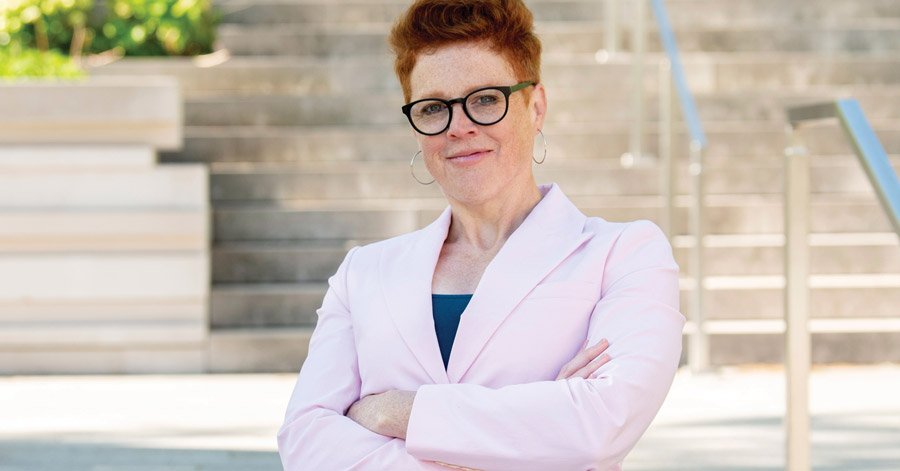
Kristin Shrimplin is someone you want in your corner.

The executive director and CEO of Women Helping Women, Shrimplin came aboard in 2015. Her passion for the organization’s dedication to preventing gender-based violence and empowering all survivors is palpable.

“I had a fire in my belly because I knew that the mission was so beautiful, and the staff were so incredible,” said Shrimplin, who previously spent 12 years with the YWCA of Cincinnati.

Kristin Shrimplin CEO of WHW

Kristin Shrimplin by Helen Adams for Movers and Makers ©2023

History of Women Helping Women

Founded in 1973 by three University of Cincinnati students, Women Helping Women is celebrating its 50th anniversary this year. The founding came from an increasing dissatisfaction with the lack of assistance available at the time to women in Cincinnati who were suffering from sexual abuse, rape and intimate partner violence.

The organization began as a single telephone line that women could call for help, stationed in a room with a cot so the founders could take shifts. A rape crisis program was initiated in 1975. They then partnered with the YWCA for a public speak-out for battered women, eventually helping to get the Battered Women Project off the ground. Next they worked with General Hospital, now UC Medical Center, for immediate rape response.

“They started up these collaborations – they started the hotline, a collaboration with the hospital, with the prosecutors, with law enforcement, and then they started going to court and responding to court,” Shrimplin said.

It wasn’t easy.

“It took a while but it was at times very frustrating but at other times really exciting and fun,” said Dr. Jill Bley, one of the original founders. “When you have a lot of women supporting you, you build up a lot of very close friendships.”

Fast forward to 2023, when the framework laid down by the WHW founders has proven invaluable.

“[We’re here] because of these women, because of Dr. Jill Bley and others, because of what they started,” Shrimplin said. “They were consistent and kept growing, and didn’t give up on that. They incorporated as a nonprofit. Today, we serve four counties, and we do a 24/7 response hotline. Last year, we took just under 15,000 calls. We now respond to 25 hospitals in this four-county region, and we do that 24/7 through three tiers of shifts of people.”

WHW also implemented a 24/7 on-scene response program called the Domestic Violence Enhanced Response Team, or DVERT. Advocates respond to 24 jurisdictions in Hamilton County, getting to the scene after a 911 call and showing up to help survivors immediately.

“It’s a groundbreaking program because often – and this is social justice – so much of the burden of violence is on the shoulders of survivors,” said Shrimplin. “So with the DVERT
program … we go out and we’re right there. It could be 3 a.m., it could be right now. And we’re focused on survivors, and often we’re asking them for the first time, ‘What do you want to see happen now?’ ”

Centering survivors

That return of autonomy to survivors is perhaps one of the most powerful ways in which Women Helping Women exemplifies the values of social justice.

“They’re the experts of their lives,” Shrimplin said. “So we’re giving them that back, and we are not making decisions for them, ever. This is about autonomy; this is about empowerment. It’s about all of those pieces, and then our role is to facilitate that.”

To that end, WHW works with 16 courts in four counties, providing court accompaniment and legal advocacy. That can look like helping secure protection orders, or going to grand jury hearings, or accompanying survivors through prosecution.

“We want to hold that space,” Shrimplin said. “And we want to follow that line all the way through – from the hotline, to going to the hospitals to going on-scene to going to court. Because again, these are all systems. And systems are so large and often systems are not equitable and they’re not set up in a way to center survivors. So we have to center a survivor and go back to, ‘What would you like to see happen?’ ”

Formative years

Shrimplin grew up in a small Ohio village, with one stoplight, on either side of which was a jail and a library. That juxtaposition would prove to be a powerful metaphor that ended up guiding her future. Because she herself experienced sexual assault when she first went to college at Kenyon University. She was, in her own words, completely lost, and contemplated dropping out. Her experience is one of the reasons Women Helping Women implemented a campus response program. It also laid a foundation for Shrimplin before she knew where her career would take her and before she had the words to describe what she wanted to do with that career.

“That’s where I learned my voice as a survivor wasn’t being heard,” Shrimplin said. “I had an incredible professor, who, when I told him I was going to drop out, said, ‘Just go on a walk with me.’ And he said, ‘Tell me what you want to study,’ and because I had that experience, and because I was thinking back to that one stoplight: To the right are all those books with a lot to learn, but I know there’s the jail – where I’m feeling lost and angry. And I said, ‘I want to study the voice of the voiceless. How do people who have that taken away – how do they get that back?’ ”

The answer, for Shrimplin, was to create her own major: Art and Authority. She studied how the art of a subdominant culture, in the face of oppressors, could be used to build community, safety and to receive resources.

“I didn’t have a name for it, but that was social justice,” said Shrimplin. “I didn’t know, in real time, that I was fighting for the voice that got taken away from me in that room, or taken away from me in high school, in a small town.”

Shrimplin thrived in her conviction to amplify the voiceless, graduating with honors. She went on to receive her master’s degree, run a domestic violence shelter in Medina County, and eventually work at the YWCA.

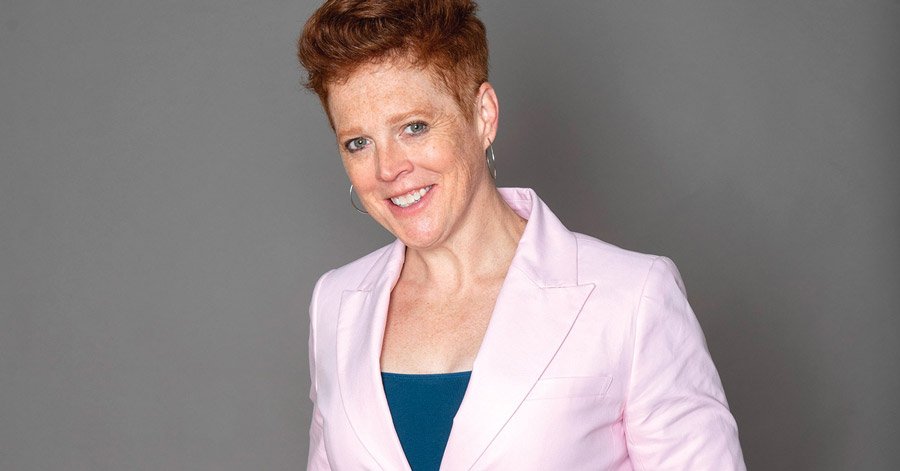
Kristin Shrimplin, WHW President and CEO

Kristin Shrimplin by Helen Adams for Movers and Makers ©2023

Working on prevention

“I love working with community,” Shrimplin said. “But I wanted to work on prevention. From there I got recruited to work at Women Helping Women – in June it’ll be eight years. When I came to Women Helping Women, I knew there was this opportunity to continue being part of the movement (against) gender-based violence.”

She helped the organization grow from 17 employees to 85, and from a budget of $975,000 – with no cash reserves – to an annual budget of $5.5 million.

“We just keep building on because part of our focus goes back to that social justice mindset and that abundance mindset – because survivors deserve abundance,” Shrimplin said. “We’re not going to stop at access, the basic human rights – no, you get abundance.”

Holistic approach

That holistic approach to advocacy is in part what helped Women Helping Women connect with bi3 – an initiative created by Bethesda Inc. that works to drive innovation in healthcare and improve community health outcomes. In 2021, the regional Community Health Needs Assessment was released. None of the results were necessarily a surprise to organizations like bi3.

“There was definitely this acknowledgement that how people think about health is not necessarily [just] from a clinical standpoint,” said Kiana Tabue, bi3’s vice president of strategic partnerships. “We really came to this realization that when we talk about health, we have to talk about it from a broader standpoint.”

In 2022, bi3 selected Women Helping Women’s Rise Beyond Violence campaign for health equity funding.

“Understanding the type of organization that Women Helping Women is, and really Kristin’s leadership, how Kristin shows up as a leader, how she shows up for community, how she partners with community, she definitely had our attention from that standpoint,” Tabue said. “We really started to think about, ‘How do we build the resilience of community, and for families?’ ”

The Rise Beyond Violence campaign’s vision is to serve 50,000 survivors in five years, provide 25,000 youth with prevention services, and raise a total of $5.6 million to enable those services.

“We want to be anywhere in the community that survivors are going to be, and students and young people,” Shrimplin said.

Woman standing in front of a podium with law enforcement and other officials behind her

August 30, 2022, www.wvxu.org

Domestic violence has gotten worse during the pandemic. But a local rapid response team for survivors and their children is expanding to meet the growing need.

The Domestic Violence Enhanced Response Team provides 24/7, trauma-focused, on-call response to domestic violence situations in Cincinnati and some surrounding areas.

The program has served more than 5,700 survivors since 2018, according to Women Helping Women, a local organization working to address gender-based and intimate partner violence. That number includes big upswings in 2021 and so far in 2022.

Now, the DVERT program will be able to help more people with an expansion to all 49 municipal jurisdictions in Hamilton County — up from 20 jurisdictions in years past.

Joining Cincinnati Edition to discuss increasing domestic violence calls, DVERT’s expansion and how the program supports survivors are Women Helping Women President and CEO Kristin Shrimplin; DVERT Program Director Callie Ward; and Cincinnati Police Assistant Chief Lt. Colonel Michael John.

Listen to Cincinnati Edition live at noon M-F. Audio for this segment will be uploaded after 4 p.m. ET.

Never miss an episode by subscribing to our podcast:

December 07 2021, cincinnati.com

Cincinnati Enquirer

For the past several years, domestic violence advocates have been responding to calls alongside Cincinnati police in an attempt to serve survivors in ways law enforcement and the legal system have struggled to do.

But the leaders of the program wanted to ensure it was working. They also wanted proof of their success. University of Cincinnati researchers have been analyzing in-depth data from the program for years now and publishing reports.

On Tuesday, the Center for Clinical and Translational Science and Training at Cincinnati Children’s Hospital Medical Center is recognizing this partnership among Women Helping Women, the Cincinnati Police Department and the UC School of Criminal Justice with an Advocacy, Partnership and Research Award.

Kristin Shrimplin is president and CEO of Women Helping Women, a nonprofit that focuses on crisis intervention of gender-based violence that includes sexual assault, domestic violence and stalking. The nonprofit created Dvert, a domestic violence response team that works with police on the scene to offer support and services to the survivor.

Kristin Shrimplin is president and CEO of Women Helping Women | Liz Dufour/The Enquirer


“The Center for Clinical and Translational Science and Training is proud to honor the recipients of these awards each year as we highlight the dedicated people in our communities and our academic health center who contribute to creating a healthier greater Cincinnati area all year round,” officials said.

The Domestic Violence Enhanced Response Team (Dvert) went on more than 950 calls last year.

In October, The Enquirer reported on how the program works, who it helps, how it fits into national calls for police reform and how it is rapidly expanding in the region.

The UC research project is scheduled to be in place for at least another two years. The information it has gathered already is invaluable according to leadership at Women Helping Women and the police department.

For example, it found that nearly 60% of the perpetrators that advocates encounter had a previous domestic violence arrest, but only 18% were ever convicted.

Paula Pierce, a survivor who was assisted by Dvert, said the real-time response of the advocate is what allowed her to get away from her abuser.

“If that lady hadn’t have come that day, I believe he’d be right here,” she said.

Dvert: 2020 perpetrator history
The Enquirer
Shadow of two people on rock terrain

Domestic violence numbers in the Greater Cincinnati and surrounding area began to see some of its highest rates ever when the pandemic started. More than 18 months later, that trend has not waned. One local leader says the situation is not hopeless, but it’s not good, either.

“I would quantifiably put it, that it is worse,” said Kristin Shrimplin, president and CEO of Women Helping Women. “We are seeing a continuing trend that has not been disrupted as it relates to intimate partner violence, domestic violence cases, the complexity of those cases, injuries that are resulting, and unfortunately and very sadly, homicide as a result of domestic violence and intimate partner violence homicide.”

Nineteen homicides this year have been linked to intimate partner or domestic violence. That’s higher than last year’s confirmed 16 cases, though that number may be as high as 20.

Shrimplin says the reasons behind the increase are complicated.

“The pandemic is not causing gender-based violence because gender-based violence has always been here. Economic strife is not causing gender-based violence because gender-based violence has always been here. However, these are additional stressors.”

Access to health care, behavioral care, education and remote working conditions all contribute to creating a powder keg situation for some. Continued health risks associated with the pandemic are also a factor, keeping people from seeking help.

“This is what we heard time and time again last year from survivors, where they knew that they were experiencing sexual assault injuries, domestic violence injuries, but were too scared to go to health care systems during a pandemic for fear of COVID,” Shrimplin said. “And I don’t think that some of those fears and challenges have abated.”

But local officials, she adds, have stepped up to try addressing some of these issues. New and improved partnerships between the police, city and county officials have made a difference.

For instance, the Domestic Violence Enhanced Response Team, which sends an advocate with police officers to domestic violence calls, expanded into 16 jurisdictions this year. The program was launched in Cincinnati.

The service has already helped 1,200 adult survivors and 1,800 children.

At both a statewide and local level, Shrimplin says more money has been allocated for domestic violence response services, which has been necessary to keep things operating as budget cuts happen elsewhere.

For instance, funding from the Victims of Crime Act has been slashed 71% in the past two years. That amounted to almost $600,000 in lost funding at an agency that has a $2 million budget.

“We’re very grateful, whether it’s a city or the county or private donors, corporations, foundations saying, ‘You know what, we’re all in this together, how can we help and be of service?’ ” Shrimplin says. “Because that is the only way we can now hire more staff. It’s not coming from some of that national support.”

Women Helping Women helps about 8,000 people per year. Its 24-hour hotline number is 513-381-5610. It can be called or texted. For more information about Women Helping Women, visit their website.

.

Purple Background

CINCINNATI — There’s another pandemic that is affecting communities nationwide and it is on the rise: Domestic violence.

What You Need To Know

  • Domestic violence seen as ‘the other pandemic’ – numbers have increased nationally and locally
  • Cincinnati has had nine domestic violence-related deaths so far this year. That’s more than the past two years combined.
  • Women Helping Women is working to make it easier for survivors to come forward
  • Experts say loved ones should watch for warning signs and be ready for “tough conversations”

Kristin Shrimplin, CEO and president of Women Helping Women (WHW), said domestic or gender-based violence is a “human rights abuse” that has long been and continues to be a public health crisis, especially during the time of isolation during the pandemic.

“The last year-plus has been a real challenge. A lot of the coordinated systems we rely on were fundamentally compromised — health care systems, social services. A lot of us, we were just trying to do the best we could to keep up,” said Shrimplin.

Despite its name, Women Helping Women serves all victims of domestic violence — regardless of gender or sexual identity.

“This is a problem that affects everyone, even if in different ways and capacities,” Shrimplin said.

One in every three women has been beaten, coerced into sex or otherwise abused in their lifetime, according to data from WHW’s website. Those numbers are getting worse during the COVID-19 pandemic.

WHW’s 24-hour support hotline is on pace to review nearly 12,000 calls for crisis support this year. Shrimplin said the text chat function is used around-the-clock.

But sometimes the calls and texts don’t come in time.

The Cincinnati Police Department said the city has already had nine domestic violence-related homicides in the first seven months of 2021. That’s more than the eight reported incidents Cincinnati has seen in the last two years combined.

Assistant Police Chief Lisa Davis said on average 6% to 8% of homicides in Cincinnati are related to domestic violence. This year, that number is closer to 18%.

“That is a big jump,” said Davis, who has been outspoken about the issue the past few weeks. Davis turned to social media to voice her frustrations following the shooting death of 31-year-old Michelle McDonald.

Police said McDonald was pregnant at the time she was gunned down by a man identified as her boyfriend.

She managed to give birth to the child she was carrying, but the newborn, Aaliyah McCoy, passed away Saturday.

“The death of Michelle McDonald and her baby are a true tragedy. [The Cincinnati Police Department] will do everything possible to hold [the suspect] accountable for their deaths,” Davis wrote in a tweet.

Shrimplin said she is not at all surprised, but for the community “this should be a very loud-sounding alarm bell.”

“Unless we enact systemic changes, what is going to keep us from having another domestic violence homicide next month,” she asked.

She explained that violence doesn’t always involve a gun or knife and there isn’t always punching or kicking. It can be verbal or emotional. Sometimes it’s sexual, even stalking.

But none of those is acceptable, Shrimplin said.

Shrimplin said it can be difficult for people experiencing domestic violence to just “pick up and leave.” Many times there are families, children, significant others involved.

WHW reports 81% of survivors report that the perpetrator is either a current or former intimate partner.

Davis said CPD responds to all domestic violence calls and will arrest or detain suspects per their policies, but there’s only so much they can do.

“That is a crime that until that person is ready to make a move, until they feel supported and able, they’re not going to,” she said. “We will keep going back to let them know that when they’re ready, we will support them. But they’ve got to make that choice themselves.”

Those first few minutes after a domestic violence incident are crucial, Shrimplin said. That’s why WHW created the Domestic Violence Enhanced Response Team (DVERT).

WHW sends DVERT staff to the scene of active domestic violence calls in Greater Cincinnati. They provide on-site resources and support to victims. They will also offer to help the survivors create a safety plan to avoid future violence. About 85% accept, Shrimplin said.

DVERT started in Cincinnati, but recently expanded to work with 15 law enforcement jurisdictions across Hamilton County.

Shrimplin said WHW team members are on pace to appear at 1,400 domestic violence police calls this year. That number is a 40% jump over last year, but Shrimplin is quick to point out it’s in part due to program expansion.

Davis said the issue is far too complex to draw conclusions about the cause of the spike. But she said pandemic-related stressors — things like a lost job, family health issues, or even being stuck at home — may exacerbate existing issues.

Shrimplin said the most important thing a person can do is be there and be aware. If you see something, say something. If someone tells you something, believe them.

“The most critical thing a person can do is listen. They need someone to say, ‘I believe you,'” she said. “Survivors need to hear that. Survivors often fear that no one will believe them so they don’t come forward.”

Domestic violence isn’t something that just happens. Davis said you’ll see “warning signs.”

“Look to see if someone is being controlling, or manipulative. Are they isolating friends and family? Those types of things you want to look for,” she said. “We all have to be willing to ask those tough questions.”

“We see many, many signs leading up to that,” Shrimplin added. “Violence can kill, but so can silence.”

The 24-hour hotline for calls or texts is 513-381-5610. More resources are available on the  Women Helping Women website.

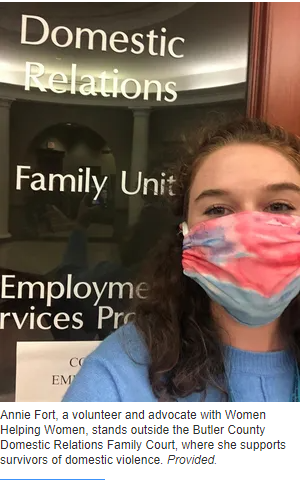
Woman Standing Outside Butler County Domestic Relations Family Court

Cincinnati City Council will give a quarter-million dollars to a nonprofit that works alongside the police to help survivors of domestic violence – a crime that has spiraled in the city during the COVID-19 pandemic.

Council unanimously voted Wednesday to approve the $250,000 in funding to Women Helping Women to use for the Domestic Violence Enhanced Response Team (DVERT).

Calls about partner violence are up, and more of the violence is life-threatening, said Kristin Shrimplin, the agency’s president and chief executive officer.

“It is staggering,” said Greg Landsman, the council member who proposed giving the financial help to the organization for the DVERT program.
Here’s how DVERT works: When Cincinnati police officers arrive at a domestic violence scene, they secure the scene, do a brief assessment and then call a DVERT advocate. The advocates, Women Helping Women employees who ensure the agency is staffed 24-7, have trauma-informed training. They help survivors get resources they need to be safe. They may go to a hospital with someone who’s hurt, provide shelter, get them legal help and sit in court with the survivor as the case moves forward.

Two Cincinnati Police Cruiser with Red and Blue Lights On

“Most of these survivors have children, and they are survivors too,” Landsman said. “If a survivor has a DVERT advocate there on the scene with our police … it makes an enormous difference in them getting support that they need.”

Calls to a Women Helping Women hotline jumped 53% this year in a 14-week period from March 16-June 30 compared to the same weeks in 2019, an analysis by the nonprofit shows. That came despite the difficulty that those experiencing partner violence had in making phone calls while their partner was in the same home, said Shrimplin said. The agency developed a texting method during this period to help keep callers safe.

Shrimplin said that, with the uncertainty that the pandemic causes, she fully anticipates a continuation of climbing calls. “This is not letting up.”

Women Helping Women advocates have seen more strangulation, more threatened gun use and more gun violence in their response to survivors, Shrimplin said.

Cincinnati in general has seen a rise in violence in general against women this year.

Early this month, the city reached a new high in homicides of women: By Sept. 9, more women had been killed  in the city than in any other year since at least 2000.

Chart of Women Killed Due to Homicidal Violence

Not all of the killings were domestic violence related, police said. But an Enquirer analysis of data from last year shows women killed in Cincinnati are more likely to be killed in partner violence or child abuse situations than any other reason.

Women Helping Women had a fundraising gap this year of $250,000, due to the pandemic, officials said. Yet the agency’s caseload of survivors has increased by 25%, its analysis shows.

Landsman said the DVERT program has proven to be helpful to mothers and children victimized by domestic assault.

“I think it’s up to us to invest in what we know is working,” he said, “and ensure that we are expanding that work so that no one in the city is left behind.”

Terry DeMio

Woman Standing Outside Butler County Domestic Relations Family Court

Terry DeMio, Anne Saker and Cameron Knight

An upswing of domestic violence was a feared consequence of the coronavirus pandemic. Now Hamilton County has evidence for it.

Women Helping Women, the southwest Ohio nonprofit that advocates and cares for victims of gender-based violence, reported Thursday it had registered a 23% increase in the number of clients from March 16 to June 30 compared to the same period a year ago.

The agency’s analysis also showed calls to its hotline jumped 53% this year over the same 14 weeks when compared to the 2019 time frame.

“COVID doesn’t cause gender-based violence. Economic stress doesn’t cause gender violence,” said Kristin Shrimplin, the agency’s president and chief executive officer. “It just adds fuel to the fire.”


In March, Shrimplin said, calls for help rose rapidly, about 20%. After the stay-at-home order was issued in mid-month, the calls dropped because, Shrimplin said, fewer domestic violence survivors could feel safe calling a hotline while at home full time with a perpetrator.

Lt. Col. Mike John of the Cincinnati Police Department works with Shrimplin on a dedicated unit that responds to domestic violence calls with police and WHW advocates. John said that even though police haven’t seen a jump in criminal reports, he is not surprised by the increase in hotline calls.

“It’s not like a simple assault at a bar,” he said. “We are very much dedicated to finding who that aggressor is and removing him from that situation. They (Women Helping Women advocates) are left to pick up the pieces.”

Women Helping Women provides that support, he said, no matter if the survivor decides to press charges.

Domestic incidents have been more violent

Shrimplin said she found another cause for alarm. More people calling the hotline had experienced brutal assaults that can be omens of fatal violence in intimate relationships.

“Strangulation, sexual assault, use of weapons, they were all up,” Shrimplin said.

Women Helping Women, like many such agencies in the United States, uses the Danger Assessment tool, a system of identifying particular domestic violence – non-fatal strangulation, for example – that can lead to femicide, the killing of a woman.

The dedicated group of WHW advocates and Cincinnati police working together is called Domestic Violence Enhanced Response Team, or DVERT. Advocates go on domestic violence calls with police to help survivors.

“What we were hearing on those calls, what we were seeing on scene with survivors, they were getting increased red flags to be killed compared to last year,” Shrimplin said.

Assault Crimes are Up
New victims

The Women Helping Women report also found people who’d never before experienced physical violence at home now calling for help.

It’s an unsurprising development. The Substance Abuse and Mental Health Services Administration’s report on intimate-partner violence during the pandemic notes that loss of jobs, income in general, a disconnect of social services and help groups, a fear of getting COVID-19 and other issues now “may stimulate violence in families where it didn’t exist before and worsen situations in homes where mistreatment and violence has been a problem.”

The April shootings

In April, six female-identified victims were fatally shot in Hamilton County, compared to five for all of 2019. The Women Helping Women report said, “While COVID-19 was not cause of death, the impact on how society functioned greatly increased the harm and lethality of individuals who were already facing long standing system barriers to safety and resources.”

6 local women have been fatally shot during the stay-at-home order – more than all of 2019

Not all the homicides have been identified as domestic violence-related, police said.

But an Enquirer analysis of data from last year shows women killed in Cincinnati are more likely to be killed in partner violence or child abuse situations than any other reason.

Shrimplin said criminal reports will lag the number of calls to the agency’s hotline. “If people show up to hospitals and work with us, if we show up at different community points, if they call our hotline, that doesn’t mean that the survivors engage with the justice system.”

John of the Cincinnati police said of WHW, “That’s why their expertise is so important.”

How can victims get help

Women Helping Women has stepped up its services.

  • In April, with no additional funding, the agency added text-ability to its hotline.
  • Its volunteers bring masks, hand sanitizers and other personal protection products to the survivors it serves.
  • When possible, the agency provides families gift cards for groceries or Lyft rides.

The state of Ohio is funneling new money to programs for domestic violence survivors.

  • Attorney General Dave Yost announced $8.75 million from the federal CARES Act would go to support rape crisis centers and domestic violence shelters, in addition to $1 million to combat COVID-19 scams throughout the state.
  • Gov. Mike DeWine also announced that 66 local victim service projects have been awarded a total of $3.2 million to support victims of crime. The projects will be funded by grants through the Family Violence Prevention & Services Act grants program.

If you are threatened or harmed or know someone who may be in danger, call or text the Women Helping Women hotline: 513-381-5610.

Kristin Shrimplin is president and CEO of Women Helping Women. A nonprofit assisting survivors of domestic violence

Byron McCauley
Cincinnati Enquirer

The partner of my aunt, an elementary school teacher, once used his meaty fists to break her face, leaving her face a bloody, unrecognizable mess.

This wouldn’t have been the first time he hit her, but it certainly was the most damaging. My aunt suffered grave injuries that required hospitalization. The whole town knew it. Yet, her abuser was walking the streets the next day.

As the pretty young wife of a jealous husband, my aunt’s daughter was a survivor, too. Her skinny husband executed a bloody attack on a hot afternoon in front of a group of terrified and petrified kids. Another cousin’s husband cracked her skull with a brick. Thankfully, she lived. All the of the abusers remained free.

I attended the Women Helping Women 2nd annual breakfast Thursday. Women Helping Women offers resources to deal with domestic violence and sex crimes. If only my kin had such support — especially when they could not count on the law to be on their side. Back then, it was not uncommon for a local lawman to help the abuser “cool off” by driving him around for a while.

Sadly, in Greater Cincinnati, the need is increasingly significant. Women Helping Women in 2017 reported helping nearly 5,800 new survivors. So far this year, it has served nearly 6,000 survivors with more than two months remaining in the year. The #MeToo movement and the U.S. Supreme Court hearing spurred more people to tell their truth. In September, the group helped 1,028 survivors.

President and CEO Kristin Smith Shrimplin reflected on the national conversation around gender-based violence. “The national narrative has changed in its belief of survivors and its treatment for survivors,” Shrimplin said during the breakfast. “Supporting survivors is not open for political debate.”

Women Helping Women volunteers are doing yeoman’s work. They go to victims’ homes with police to remove them. They staff a crisis line 24 hours a day, every day. They meet rape survivors in hospital emergency rooms. They support survivors in court. They train leaders in the workplace to recognize a victim of gender-based violence on their team.

They have campus advocates at Miami University and the University of Cincinnati.

They help families. In February, the organization partnered with the Cincinnati Police Department to start the DVERT program. So far, the program has helped 472 adults and 588 children out of domestic violence.

The insidious thing about gender-based violence is its stealth. Horrified victims don’t tell other people what they are going through. When they miss work or are chronically tardy, an HR issue arises, and the real problem is masked. They may not have visible evidence of abuse, but their scars show up in other ways.

All of us need to be better equipped to spot someone who may be suffering, to engage them and be an advocate for them. The numbers in our community are trending upward across the board. And today, largely because of organizations like Women Helping Women, a strategic approach to help is available.

No one needs to suffer in silence anymore. Byron McCauley Enquirer Columnist

Byron McCauley writes about education and family life. He also serves on the Enquirer editorial board. Email: [email protected]. Social: @byronmccauley.