Women Helping Women: Building safety and stability for violence survivors is a group effort; Violence does not end when the perpetrator is gone. It ends when survivors are safe.
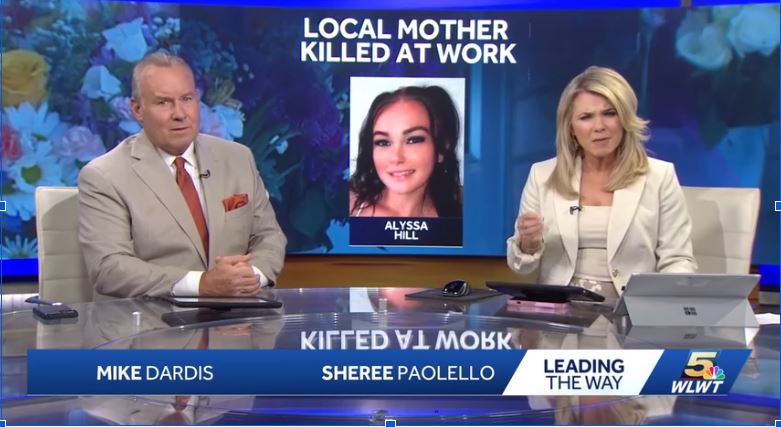
NORWOOD, Ohio — A young mother of two was stabbed to death by an ex-boyfriend while working at a Norwood Skyline Chili, investigators said.
Community members are mourning the loss of Alyssa Hill; she was a server at Skyline, a devoted mom and friend who was beloved by many.
Police say Rick Wright showed up at the restaurant at 12:30 p.m. Tuesday afternoon, attacking her in broad daylight.
Friends are still in shock. They say Hill and Wright only dated briefly and broke up long before the deadly stabbing.
Advocates with Women Helping Women say, sadly, this kind of violence can happen after one date, a month of dating, even well after a relationship is over.
Amber Malott is the vice president of programming for the organization, sharing the resources available to anyone dealing with abuse, violence or someone making them feel unsafe.
It’s not clear exactly what led up to the stabbing that claimed Hill’s life.
Advocates say interpersonal violence of any kind can happen without warning.
“We know that violence can happen anywhere,” Malott said. “Statistically speaking, it’s those that you have a relationship with, or at least some kind of acquaintance, that is the perpetrator of abuse.”
Prosecutors say Wright had prior convictions and most recently violated parole on an assault charge from last year.
Is Anybody Out There?” is a powerful and heartfelt podcast co-hosted by Patti Collins and Andrea Langefeld, empowered by Women Helping Women. Dedicated to raising awareness about domestic violence, the show creates a safe and supportive space where survivors, advocates, and allies can speak, be heard, and find connection. Each episode shines a light on the many forms of abuse—emotional, physical, financial, and psychological—through unfiltered survivor stories, expert perspectives, and practical resources for healing and empowerment. Through survivor stories, expert conversations, musical guests, and open listener call-ins, each episode builds a community of hope, strength, and understanding. Whether you’re surviving, healing, or supporting someone who is, this podcast reminds you: you are not alone. Join Patti Collins and her guests as they break the silence, end the stigma, and empower women everywhere.
Please take care of yourself this Mental Health Month and check out the Sweetwater Bootsy Collins page here! If you are a survivor, a supporter, or someone who believes in the power
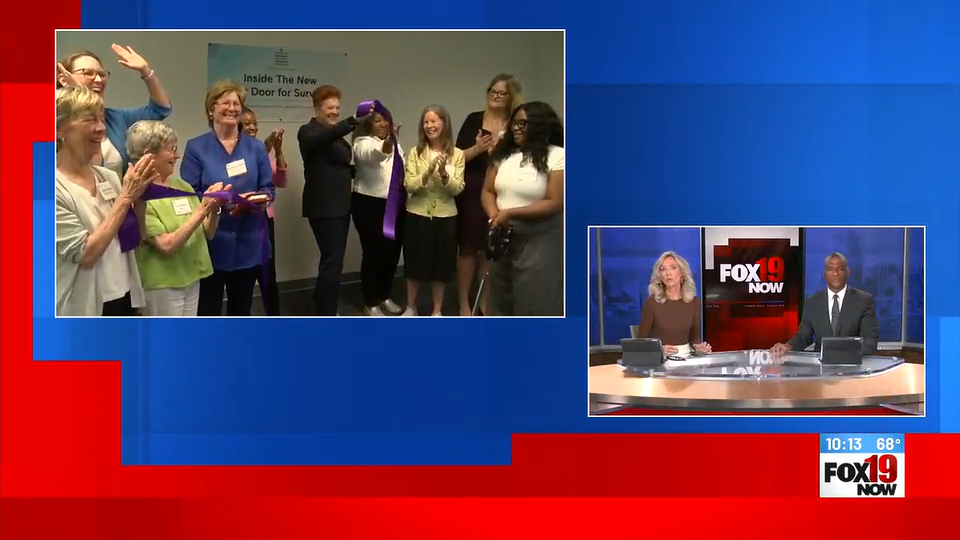
CINCINNATI (WXIX) – A ceremony was held Thursday to welcome a new 24/7 hotline hub for domestic violence survivors in the Tri-state.
The Women Helping Women hotline went from one small room 52 years ago to an entire call center dedicated to supporting domestic violence survivors.
Unfortunately, the need for the space is in part because of the increase in domestic violence and sexual assault, both in the state and beyond.
“It was just a small office, and we recruited as many people as we could to be volunteers,” Jill Bley, founding member, said.
“We were all students at UC, and we had a women’s center, and we kept getting calls from women about rape and things and we didn’t know what to do. So we got together and started talking about what we could do.”
What started off as an idea to help others in any way quickly grew into a life-saving organization.
On Thursday, a new space dedicated to increasing infrastructure for survivors’ safety was revealed.
“Because we quantifiably know, unfortunately, that violence has increased in the nation, in the state and in the region, we had to increase our ability to respond,” Kristin Shrimplin, president and CEO, said.
In 2025, Women Helping Women answered more than 20,000 domestic violence calls, the largest call volume in the state for survivors and a 6% increase from 2024. The organization’s projected call volume will hit a record in 2026.
The space allows for more calls to be taken, but it’s also a way to bring the previously remote hotline team together so that they can have support for the secondhand trauma that comes from answering those calls.
“Up to 55% of survivors are experiencing strangulation, so when we answer that call, it’s hugely critical not only to bring more of a dedicated space, but to support the staff that are answering that call,” Shrimplin said.
We know domestic violence impacts half of all women and one in every four men, and those odds keep increasing year after year.
The hotline is open 24/7, 365 days a year at 513-381-5610.
The video highlights a ceremony celebrating the unveiling of a brand-new, expanded 24/7 hotline and response space for Women Helping Women. The organization, which began 52 years ago as a small volunteer effort by students at the University of Cincinnati, has grown into a major life-saving operation.
The expansion was prompted by a continuous rise in domestic violence and sexual assault cases both nationally and locally in Ohio. In 2025, Women Helping Women answered over 20,000 calls—the largest call volume for survivors in the state—and they project a record-breaking volume for 2026. Beyond allowing the organization to process more calls, the dedicated hub brings the previously remote hotline team together under one roof, providing critical peer support to staff managing secondhand trauma from high-stakes emergency situations (such as calls involving strangulation, which impacts up to 55% of survivors).
Representatives & Speakers
Kristen Shrimplin – President and CEO of Women Helping Women, who speaks on the necessity of increasing their infrastructure to respond to the quantifiable rise in regional and national violence.
The video features an interview on FOX19 NOW during International Women’s Month discussing the critical work of the non-profit organization Women Helping Women across Greater Cincinnati and Southwest Ohio. The organization has been operating for 52 years, providing 24/7 crisis response and intervention services. It is revealed that in the previous year, the agency served nearly 9,300 survivors and answered approximately 21,000 hotline calls, marking the highest hotline volume in the state of Ohio. The conversation highlights how domestic violence and assault isolate survivors and explains that the hotline provides a vital space of compassion, belief, and support. Viewers are encouraged to reach out to their free, confidential 24-hour hotline or visit their website to volunteer and get involved.
Representatives Named
Kristen Shrimplin – Executive Director of Women Helping Women, who speaks about the organization’s mission, regional impact, and available resources.
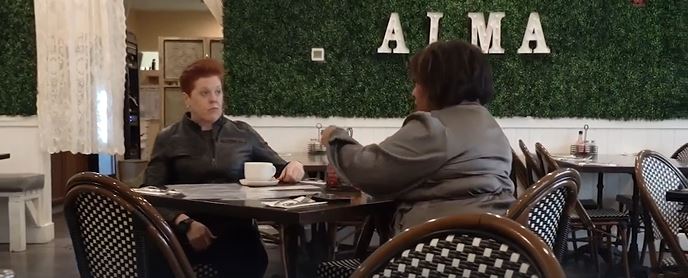
This week on Come Have Coffee, Michelle had the chance to spend time with Kristin Shrimplin of Women Helping Women — a strong, compassionate leader doing powerful work on behalf of women across our community.
They stopped by Kristin’s favorite coffee shop, but more importantly, they slowed down to really get to know the woman behind the mission.
What drives her passion
Why this work chose her
And how she finds joy and balance while doing work that can be heavy.
It’s honest, inspiring, and full of heart.
If you are currently experiencing abuse, please call or text the Women Helping Women 24/7 Help Line at 513-381-5610 for help.
Let’s Talk Cincy focusing on the ongoing, life-saving mission of the regional nonprofit organization Women Helping Women (WHW).
The Mission: The segment highlights how the organization prevents gender-based violence, domestic violence, sexual assault, and stalking while actively empowering survivors throughout Greater Cincinnati and Southwest Ohio.
Critical Resources: The discussion centers on their crucial 24/7 crisis response infrastructure, including their free and confidential hotline, live chat features, and hospital-based advocacy.
Community Engagement: The representatives discuss the importance of breaking down isolation for survivors and invite the Greater Cincinnati community to get involved through volunteering, education programs, and regional partnership initiatives.
Representative Named
Kristin Shrimplin – President and CEO of Women Helping Women (who traditionally represents the agency on regional broadcast programs like Let’s Talk Cincy to share statistics, advocate for survivor services, and outline community prevention programs).
CINCINNATI — The holiday season brings joy and celebration for many families. Still, domestic violence advocates warn that this time of year can be especially dangerous for survivors at home with their abusers.
Women Helping Women, a nonprofit that provides resources to domestic violence and sexual assault survivors, reports a significant increase in calls for help before and during the holidays.
The organization operates a domestic violence crisis hotline available 24/7 for those who need support.
“Sometimes, certain festivities or customs that are traditional with holidays and celebrations often escalate violence or abuse, or trigger folks who have not received any support or intervention,” Amber Malott said. “We do anticipate our hotline to increase as the holidays come closer.”
Malott said that by the end of the third quarter this year, Women Helping Women had already served approximately 16,000 survivors through their hotline. She said she anticipates they will serve around 21,000 different survivors by year’s end.
Malott explains why Women Helping Women sees an increase in calls during the holiday season
One of the hidden realities during the holiday season is that survivors may feel trapped at home with abusers due to limited access to safe spaces and support systems.
“Isolation is a huge issue,” Malott said. “Folks that are experiencing violence, if they’re currently in that relationship where that violence is active, they may not be able to attend family events or celebrations, because their abuser may try to keep them isolated from the support systems that they have, so that no one is aware of what’s going on with them.”
Monica Woody, a domestic violence survivor, shared her experience, hoping to help others in similar situations.
Malott said that violence can escalate during the holidays due to factors like alcohol consumption, substance abuse and financial stress.
She told us survivors should seek help when they feel ready and safe to do so and offered up advice for those close to survivors.
“Someone discloses to you that they have been involved in violence, the first thing that you need to do is listen to them and keep it confidential, believe them,” Malott said. “Always support them and ask them what safety and resources would look like for them.”
Malott said anyone experiencing abuse can call the Women Helping Women hotline at 513-381-5610.
“We urge anyone who’s experiencing abuse to find the appropriate time to call when it’s safest for them,” Malott said. “I want everyone to be safe.”
This column is on behalf of Women Helping Women, a nonprofit with locations in Hamilton and throughout the Southwest Ohio region that works to prevent gender-based violence and empower survivors.
If experience has taught us anything, it is this: we cannot succeed in life alone. We need each other for connection, support, companionship, and compassion. This is never truer than when someone’s life is shattered by gender-based violence. In those moments, the presence or absence of support determines whether a survivor can move forward.
At Women Helping Women, we know we cannot do this work alone. Survivors cannot overcome the physical, emotional, and financial toll of violence without systems of support. Again and again, we see how abuse disrupts stability, housing is lost, credit is damaged or wages are stolen.
The barriers are too significant for survivors to bear alone. When survivors are left without systems of support, the costs ripple through our community: higher rates of eviction, job loss, and lost economic productivity. These are not just personal tragedies; they are community-wide setbacks.
That is why our community matters. That is why partnerships matter. The connections Women Helping Women has built across sectors, especially with corporate partners, are life-saving ecosystems. Together, we create the safety nets that survivors deserve. Together, we remove barriers so survivors can reclaim stability and rebuild futures.
Violence does not end when the perpetrator is gone. It ends when survivors are safe. It ends when they have the means to pay rent, to buy groceries, or to fix a broken car. It ends when survivors are empowered to heal, to live with dignity and to thrive. And that takes time. It takes courage. It takes support. It takes all of us.
On October 21, Women Helping Women will host our 8th Annual National Virtual Corporate Breakfast: Big Bets, Bold Ideas and Trust-Based Ecosystems. This gathering will bring together leaders across business and community sectors for a bold conversation about collaboration and the life-saving impact it creates for survivors of gender-based violence. We will ask together: What does it mean to create systems of support that truly work? How do we move from intention to impact?
Safety and stability do not magically appear after a 911 call, or a restraining order is issued. They begin with ecosystems that remove barriers, one by one. They begin with collaboration. They begin with us. When a corporation invests in survivor stability, they are investing in stronger employees, stronger families, and stronger communities. It is a return on investment that benefits us all.
We invite you to join us at our National Virtual October Corporate Breakfast to show up for those who cannot, to add your voice to this essential conversation, and to be part of the movement that invests in survivors’ futures.
Kristin Smith Shrimplin is the president and CEO of Women Helping Women with a focus on social innovation, collaboration, and impact. She has more than 20 years of experience as a nonprofit leader with a strong focus on generating systems-based change through nuanced strategies of disruption and collaboration.
Women Helping Women serves nearly 8,500 survivors of gender-based violence a year. Shrimplin also serves on the Board of the Human Services, Jewish Family Services, and the HealthPath Foundation of Ohio.
This mode enables people with epilepsy to use the website safely by eliminating the risk of seizures that result from flashing or blinking animations and risky color combinations.
Visually Impaired Mode
Improves website's visuals
This mode adjusts the website for the convenience of users with visual impairments such as Degrading Eyesight, Tunnel Vision, Cataract, Glaucoma, and others.
Cognitive Disability Mode
Helps to focus on specific content
This mode provides different assistive options to help users with cognitive impairments such as Dyslexia, Autism, CVA, and others, to focus on the essential elements of the website more easily.
ADHD Friendly Mode
Reduces distractions and improve focus
This mode helps users with ADHD and Neurodevelopmental disorders to read, browse, and focus on the main website elements more easily while significantly reducing distractions.
Blindness Mode
Allows using the site with your screen-reader
This mode configures the website to be compatible with screen-readers such as JAWS, NVDA, VoiceOver, and TalkBack. A screen-reader is software for blind users that is installed on a computer and smartphone, and websites must be compatible with it.
Online Dictionary
Readable Experience
Content Scaling
Default
Text Magnifier
Readable Font
Dyslexia Friendly
Highlight Titles
Highlight Links
Font Sizing
Default
Line Height
Default
Letter Spacing
Default
Left Aligned
Center Aligned
Right Aligned
Visually Pleasing Experience
Dark Contrast
Light Contrast
Monochrome
High Contrast
High Saturation
Low Saturation
Adjust Text Colors
Adjust Title Colors
Adjust Background Colors
Easy Orientation
Mute Sounds
Hide Images
Hide Emoji
Reading Guide
Stop Animations
Reading Mask
Highlight Hover
Highlight Focus
Big Dark Cursor
Big Light Cursor
Cognitive Reading
Virtual Keyboard
Navigation Keys
Voice Navigation
Accessibility Statement
womenhelpingwomen.org
October 18, 2026
Compliance status
We firmly believe that the internet should be available and accessible to anyone, and are committed to providing a website that is accessible to the widest possible audience,
regardless of circumstance and ability.
To fulfill this, we aim to adhere as strictly as possible to the World Wide Web Consortium’s (W3C) Web Content Accessibility Guidelines 2.1 (WCAG 2.1) at the AA level.
These guidelines explain how to make web content accessible to people with a wide array of disabilities. Complying with those guidelines helps us ensure that the website is accessible
to all people: blind people, people with motor impairments, visual impairment, cognitive disabilities, and more.
This website utilizes various technologies that are meant to make it as accessible as possible at all times. We utilize an accessibility interface that allows persons with specific
disabilities to adjust the website’s UI (user interface) and design it to their personal needs.
Additionally, the website utilizes an AI-based application that runs in the background and optimizes its accessibility level constantly. This application remediates the website’s HTML,
adapts Its functionality and behavior for screen-readers used by the blind users, and for keyboard functions used by individuals with motor impairments.
If you’ve found a malfunction or have ideas for improvement, we’ll be happy to hear from you. You can reach out to the website’s operators by using the following email
Screen-reader and keyboard navigation
Our website implements the ARIA attributes (Accessible Rich Internet Applications) technique, alongside various different behavioral changes, to ensure blind users visiting with
screen-readers are able to read, comprehend, and enjoy the website’s functions. As soon as a user with a screen-reader enters your site, they immediately receive
a prompt to enter the Screen-Reader Profile so they can browse and operate your site effectively. Here’s how our website covers some of the most important screen-reader requirements,
alongside console screenshots of code examples:
Screen-reader optimization: we run a background process that learns the website’s components from top to bottom, to ensure ongoing compliance even when updating the website.
In this process, we provide screen-readers with meaningful data using the ARIA set of attributes. For example, we provide accurate form labels;
descriptions for actionable icons (social media icons, search icons, cart icons, etc.); validation guidance for form inputs; element roles such as buttons, menus, modal dialogues (popups),
and others. Additionally, the background process scans all the website’s images and provides an accurate and meaningful image-object-recognition-based description as an ALT (alternate text) tag
for images that are not described. It will also extract texts that are embedded within the image, using an OCR (optical character recognition) technology.
To turn on screen-reader adjustments at any time, users need only to press the Alt+1 keyboard combination. Screen-reader users also get automatic announcements to turn the Screen-reader mode on
as soon as they enter the website.
These adjustments are compatible with all popular screen readers, including JAWS and NVDA.
Keyboard navigation optimization: The background process also adjusts the website’s HTML, and adds various behaviors using JavaScript code to make the website operable by the keyboard. This includes the ability to navigate the website using the Tab and Shift+Tab keys, operate dropdowns with the arrow keys, close them with Esc, trigger buttons and links using the Enter key, navigate between radio and checkbox elements using the arrow keys, and fill them in with the Spacebar or Enter key.Additionally, keyboard users will find quick-navigation and content-skip menus, available at any time by clicking Alt+1, or as the first elements of the site while navigating with the keyboard. The background process also handles triggered popups by moving the keyboard focus towards them as soon as they appear, and not allow the focus drift outside it.
Users can also use shortcuts such as “M” (menus), “H” (headings), “F” (forms), “B” (buttons), and “G” (graphics) to jump to specific elements.
Disability profiles supported in our website
Epilepsy Safe Mode: this profile enables people with epilepsy to use the website safely by eliminating the risk of seizures that result from flashing or blinking animations and risky color combinations.
Visually Impaired Mode: this mode adjusts the website for the convenience of users with visual impairments such as Degrading Eyesight, Tunnel Vision, Cataract, Glaucoma, and others.
Cognitive Disability Mode: this mode provides different assistive options to help users with cognitive impairments such as Dyslexia, Autism, CVA, and others, to focus on the essential elements of the website more easily.
ADHD Friendly Mode: this mode helps users with ADHD and Neurodevelopmental disorders to read, browse, and focus on the main website elements more easily while significantly reducing distractions.
Blindness Mode: this mode configures the website to be compatible with screen-readers such as JAWS, NVDA, VoiceOver, and TalkBack. A screen-reader is software for blind users that is installed on a computer and smartphone, and websites must be compatible with it.
Keyboard Navigation Profile (Motor-Impaired): this profile enables motor-impaired persons to operate the website using the keyboard Tab, Shift+Tab, and the Enter keys. Users can also use shortcuts such as “M” (menus), “H” (headings), “F” (forms), “B” (buttons), and “G” (graphics) to jump to specific elements.
Additional UI, design, and readability adjustments
Font adjustments – users, can increase and decrease its size, change its family (type), adjust the spacing, alignment, line height, and more.
Color adjustments – users can select various color contrast profiles such as light, dark, inverted, and monochrome. Additionally, users can swap color schemes of titles, texts, and backgrounds, with over seven different coloring options.
Animations – person with epilepsy can stop all running animations with the click of a button. Animations controlled by the interface include videos, GIFs, and CSS flashing transitions.
Content highlighting – users can choose to emphasize important elements such as links and titles. They can also choose to highlight focused or hovered elements only.
Audio muting – users with hearing devices may experience headaches or other issues due to automatic audio playing. This option lets users mute the entire website instantly.
Cognitive disorders – we utilize a search engine that is linked to Wikipedia and Wiktionary, allowing people with cognitive disorders to decipher meanings of phrases, initials, slang, and others.
Additional functions – we provide users the option to change cursor color and size, use a printing mode, enable a virtual keyboard, and many other functions.
Browser and assistive technology compatibility
We aim to support the widest array of browsers and assistive technologies as possible, so our users can choose the best fitting tools for them, with as few limitations as possible. Therefore, we have worked very hard to be able to support all major systems that comprise over 95% of the user market share including Google Chrome, Mozilla Firefox, Apple Safari, Opera and Microsoft Edge, JAWS and NVDA (screen readers).
Notes, comments, and feedback
Despite our very best efforts to allow anybody to adjust the website to their needs. There may still be pages or sections that are not fully accessible, are in the process of becoming accessible, or are lacking an adequate technological solution to make them accessible. Still, we are continually improving our accessibility, adding, updating and improving its options and features, and developing and adopting new technologies. All this is meant to reach the optimal level of accessibility, following technological advancements. For any assistance, please reach out to





 October 3, 2025,