Cameron Knight
Cincinnati Enquirer
Cincinnati police officers used force fewer times in 2019 than in any year since at least 2000, and the number of use-of-force incidents has been steadily declining.
For the first year in two decades, Cincinnati police averaged less than one incident per day in which force had to be used.
The Enquirer examined the use-of-force database maintained by the police department and the city. According to police leadership, it offers evidence that dozens of policy changes and increased training have made a difference on the streets of the city
It also shows the results of a successful grassroots movement to reform the police and a step in the right direction to the larger goal of eliminating all unnecessary or excessive force, reformers say.
In policing, force can mean a variety of things. When an officer uses a Taser or forces a person to the ground to compel someone to submit, that is reported as a use-of-force.
But the term covers a wide range of actions – from shooting and killing someone to an injury a person may have suffered falling during foot pursuit.
Along with fewer use-of-force incidents, total arrests were at historic lows. And in 2019, one-tenth the number of juveniles were arrested on misdemeanor and felony charges when compared in 2000.
Serious violent and property crimes have also decreased, while police “calls for service,” a measure of how many interaction police have with citizens, has remained steady.
From 2017 to 2019, Cincinnati police averaged each year about 295,000 calls for service that required a police response, about 22,800 arrests and 366 use-of-force incidents.
That means force is used in about one in every 1,000 police contacts, and about 8% of police contacts result in an arrest.
John Vespucci is a national expert on use-of-force at the John Jay College of Criminal Justice in New York.
He said Cincinnati’s trend is similar to many other large metropolitan agencies as training increases and “zero tolerance” policies are eliminated.
“With more education, police have more tools,” Vespucci said. “Having more education, police are less likely to use excessive force.”
He also said there was a “Ferguson Effect,” a nationwide drop in use-of-force following the civil unrest in Missouri in 2014. The shooting of 18-year-old, unarmed Michael Brown sparked days of civil unrest and nationwide protests. The incident added significant momentum to the Black Lives Matter movement.

Cincinnati Police Chief Eliot Isaac credits better training and tools along with a focus on crime data and a fundamental shift toward accountability, transparency and improvement.

These issues are being talked about all over the country right now, he said, but it started in Cincinnati nearly 20 years ago.
“We had our Ferguson. We had a George Floyd effect here with Timothy Thomas,” Isaac said. “That’s where you saw a major transition in our agency.”
Civil unrest followed the 2001 death of Thomas, just one in a string of unarmed Black men who died at the hands of police. Then came federal intervention and a mandate from the Department of Justice to reform. Eventually, the Collaborative Agreement was struck, a contract between the police and the citizens they serve.
“It is very evident that there were things that were done wrong in the past. … That’s not hard for me to admit at all. We need to learn from those things,” Isaac said. “This department has owned that. We are not the same police department that we were prior to the Collaborative Agreement.”
Fewer arrests mean less force
Attorney Al Gerhardstein represented the community during the Collaborative Agreement negotiation and has remained a watchdog of the Cincinnati Police Department.

He said his strategy from the beginning has been to push for fewer arrests and fewer encounters with police. This will inevitably reduce harm, he explained.
And Gerhardstein’s work appears to have paid off. Arrests in 2019 were down 54% compared to 2000 and 32% compared to 2001.

Isaac supports the philosophy of reduced arrests.
“We cannot reduce crime by … mass arrest. That’s an ineffective and antiquated way to reduce crime in the city,” Isaac said. “We did more harm than good by making large numbers of arrests, decimating a community. Look at the African American community.”
Now data leads investigators to specific crime hotspots and specific criminals instead of casting a broad net over entire communities, Issac said.
However, Gerhardstein said racial disparities and other problematic trends still exist when it comes to the department’s use of force.
For instance, police used force against juveniles 40 times in 2019. In 36 of those instances, the juveniles were Black.
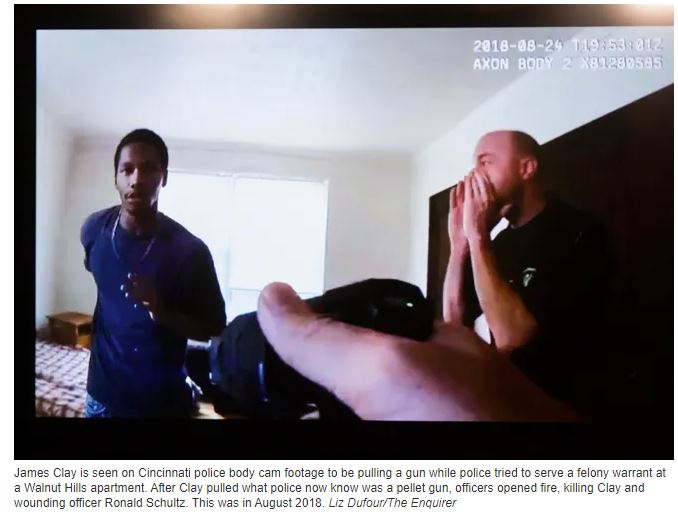
Gerhardstein said the last three people shot – Omar Santa Perez, James Clay and Jawari Porter – and killed by Cincinnati police all suffered from mental health issues.
The Enquirer previously reported that Porter and Clay had a history of mental illness. In 2018, Isaac said Santa – who killed three people in the Fifth Third Center mass shooting – might have struggled with mental health issues.
“The police are dealing with people who are unstable and armed. I understand why they have to use deadly force,” he said. “While those shootings were deemed justified, that should not be the end of the inquiry. The work of collaborative policing asks … how the police ended up there.”
Use-of-force research
There were 308 use-of-force incidents in Cincinnati in 2019.
None were deadly. Three were shootings.
A Taser report was the most common type of report filed, but the basic data doesn’t show if less severe types of force were used alongside the Taser.
Robin S. Engel is the director of the University of Cincinnati Center for Police Research and Policy. She recently completed a report with her fellow researcher Amanda Shoulberg and the University of Texas at San Antonio researchers Michael Smith and Rob Tillyer.
The research looks at use-of-force in Cincinnati in an unprecedented way, Engel said.
Unlike the data that is reported in public databases, Engel’s team looked through every individual report, including the narrative of what happened as written by a police supervisor.
Her team developed a new way to code every single action documented in the report along with the usual demographic data. She was particularly interested in resistance and force demonstrated by the citizen and how officers reacted to that.
“The race of the suspect doesn’t predict the level of force that an officer will use,” Engel said. “It’s the level of resistance. Black and Hispanic suspects were not more likely to have higher levels of force used against them compared to white suspects. There was not a race effect there.”
She said there is some racial disparity among suspects who resist. The research did not have an answer as to why.
Engel also said the research showed officers are not escalating force. When a person begins resisting police, officers often meet that resistance with less force than the suspect is using.
Have police ever acted on racial bias when it comes to force?
Engel said her data does not go back far enough to show if this has always been the case, but she’s been researching police and looking at the data for a long time.
“My speculation is that this is related to the training of officers in use-of-force,” Engel said. “We are training them in de-escalation and it appears to be working.”
She said this report also shows there are factors outside of an individual officer’s response that play a role in the racial disparities that appear in use-of-force statistics.
She emphasized that if everyone is focused on the potential bias at the officer-level, then other problems are ignored.
Gerhardstein said that distrust, fear and a perceived lack of legitimacy about why a person is being stopped all contribute to resistance. He added that how officers make their initial approach also dictates how people will react.
“Resistance is police speak,” Gerhardstein said. “It’s not very useful in addressing abuse of force and community trust.”
Engel is working on other projects that could yield even more detail about how force happens in police encounters. She’s examining officer and citizen injury rates and working to develop a way to code body camera footage, so the recorded events can be analyzed statistically, as well.
She hopes these projects might be more free from bias that could be present in the police reports, which are written by police officers.
Engel also noted there’s a limit to what the data can say about policing in general. The report used data gathered from Tulsa and Cincinnati, and Engel said it was even difficult comparing those two similarly-sized cities.
There are about 18,000 police agencies in the United States. The majority are small. According to the Department of Justice, more than two-thirds of local police departments serve populations of less than 10,000 residents.
There are different policies, different populations, different reporting standards. Engel said this makes taking police reform on at a national level very difficult.
“We need more engagement at the state-level for police reform,” she said. “We can start to even out some of these inconsistencies across agencies.”
Gov. Mike DeWine has proposed reforms for Ohio along with local representative Cindy Abrams.. If passed, police officers may need a state license to work. Tracking officer use-of-force at the state level could also be part of the licensing process.
Looking forward
Cincinnati Chief Isaac said he knows there’s more work to do.
“We still see disparities along racial lines,” Isaac said. “We’re not perfect, but we have a very strong foundation. There has been a tremendous amount of work done over the past decade and a half that I don’t want to see lost.”
He said his department will continue to voluntarily engage with Engel and other researchers to better understand the use-of-force.
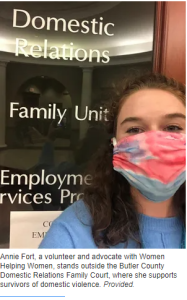
The department also uses a mobile crisis unit, which allows mental health professionals to respond alongside police when someone is experiencing mental illness. A police partnership with the non-profit Women Helping Women dispatches social service workers alongside police in domestic violence situations.
When it comes to reviewing force when it happens, Isaac said, “When things are functioning normally, we have parallel and independent body that takes a look at that… the CCA. They have had some challenges with staffing and some of those things.”
The Citizen Complaint Authority has been underfunded for two years. Its director quit in January.

Between 2014 and 2019, the CCA “sustained” 12 different complaints against Cincinnati police officers regarding use-of-force. Funding issues have created a backlog in their investigations.
Gerhardstein, the lawyer who worked on the Collaborative Agreement, said that properly addressing mental health is the “next frontier” in policing. He said a coalition of mental health stakeholders formed last year as part of the national Stepping Up initiative, and that Cincinnati police need to connect with that community.
“Cincinnati police have improved, but not enough,” Gerhardstein said, arguing the mobile crisis unit should be expanded.
Gerhardstein said the Cincinnati Black United Front and the Children’s Law Center are also working to find solutions to the racial disparities in use-of-force against young people. The young leaders who have emerged during recent protests and working with Cincinnati Black United Front leader Iris Roley and should be heard, he said.
Isaac said reform and change will occur.
“We are looking for opportunities to be better,” he said. “I’ve been in the profession for over 30 years now. This is extremely different than when I started in the late ’80s. I think it’s a natural expectation that people should expect the police department to evolve and transform over time.”